
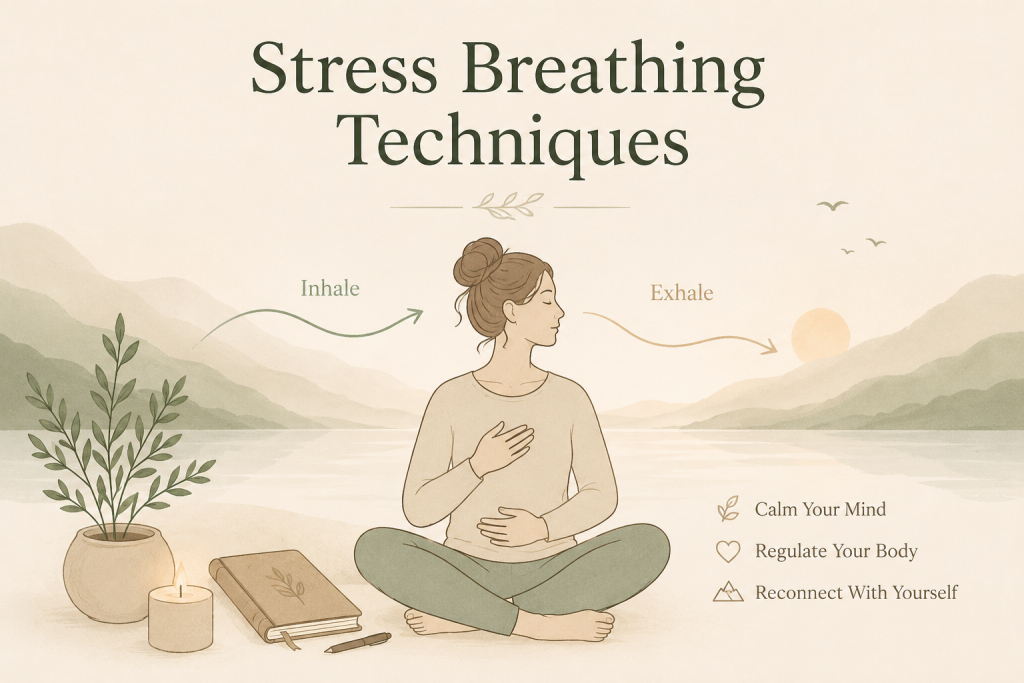
Stress can make us feel trapped inside our own minds.
Our breathing becomes shallow. Our thoughts speed up. The body remains tense, alert, and overwhelmed. Even simple tasks may begin to feel emotionally exhausting.
In these moments, breathing techniques can help create a small sense of space.
Not because they magically remove all stress, but because they can gently reconnect us with the present moment, the body, and ourselves.
This article explores simple stress breathing techniques alongside deeper reflections inspired by the Four Fundamental Motivations in Existential Analysis. Rather than focusing only on “calming down,” these practices invite us to slow down, reconnect inwardly, and create emotional steadiness during difficult moments.
Why Breathing Helps During Stress
When we are stressed, the nervous system often shifts into survival mode.
We may experience:
- racing thoughts
- tension
- chest tightness
- panic
- emotional overwhelm
- restlessness
- difficulty sleeping
- irritability
Breathing slowly and intentionally can help signal safety to the body.
It can:
- slow the heart rate
- reduce physical tension
- increase emotional awareness
- create a feeling of grounding
- help interrupt spirals of anxiety or panic
The goal is not perfect calm.
The goal is simply to create a little more space inside the experience.
1. Longer Exhale Breathing
One of the gentlest ways to calm the nervous system is by making the exhale slightly longer than the inhale.
You might try:
- inhaling slowly for 4 seconds
- exhaling slowly for 6 seconds
Repeat this several times at your own pace.
As you breathe, notice:
- the movement of your shoulders
- the feeling of the chair beneath you
- the slowing of the breath
- the small shift happening inside the body
You do not need to force relaxation.
Simply allow yourself to pause.
2. Box Breathing
Box breathing is often used to reduce stress and create steadiness.
Try:
- inhale for 4 seconds
- hold for 4 seconds
- exhale for 4 seconds
- pause for 4 seconds
Repeat gently.
Some people find it helpful to imagine tracing the shape of a square while breathing.
This technique can be especially useful during:
- emotional overwhelm
- racing thoughts
- moments of panic
- exam stress
- work pressure
3. Grounding Breath With Reflection
Stress often pulls us away from ourselves.
This breathing practice combines breath with gentle existential reflection.
As you breathe slowly, ask yourself:
- What do I need right now?
- What feels overwhelming?
- What would help me feel safer or more supported?
- What am I holding emotionally?
- What can I soften, even slightly?
Sometimes breathing becomes more meaningful when paired with honest self-reflection.
4. Hand-on-Heart Breathing
This technique can help create emotional warmth and self-compassion during difficult moments.
You may wish to:
- place one hand on your chest
- breathe slowly and naturally
- notice the rise and fall of the body
As you breathe, gently remind yourself:
- I do not need to solve everything immediately.
- I am allowed to slow down.
- This feeling will not last forever.
- I can support myself through this moment.
Stress often becomes heavier when we fight ourselves internally.
Compassion can soften that struggle.
5. Breathing and Body Awareness
Stress is not only mental.
It also lives in the body.
As you breathe slowly, notice:
- jaw tension
- shoulders
- chest tightness
- stomach sensations
- clenched hands
- restlessness
Rather than judging these sensations, simply notice them.
Awareness itself can sometimes begin calming the nervous system.
Stress and the Four Fundamental Motivations
Sometimes stress is not only about being busy.
Sometimes it reflects a deeper existential imbalance.
The Four Fundamental Motivations in Existential Analysis explore four core human needs:
- safety
- relationship
- self-worth
- meaning
When one of these foundations feels unstable, stress may intensify.
1. Can I Be Here?
Safety and Support
Stress may increase when we feel:
- emotionally unsafe
- overwhelmed
- unsupported
- pressured
- unable to rest
Reflection:
- What currently feels emotionally unsafe or overwhelming?
- What helps me feel grounded or protected?
2. Do I Like Living?
Connection and Emotional Nourishment
Stress can disconnect us from joy and emotional warmth.
Reflection:
- What helps me feel emotionally connected to life?
- What moments still bring calm, beauty, or appreciation?
→ Read: Meditations on Joy: Reflections on Meaning, Presence and Emotional Fulfillment
3. Am I Allowed to Be Myself?
Self-Worth and Authenticity
Stress often grows when we constantly abandon our own needs.
Reflection:
- What expectations are exhausting me?
- Am I treating myself with compassion?
4. What Am I Living For?
Meaning and Direction
Stress can become heavier when life feels disconnected from meaning.
Reflection:
- What truly matters to me beneath the stress?
- What values do I want to live by during difficult moments?
→ Read: Meditation for Existential Crisis: Finding Meaning When Everything Feels Uncertain
Journaling After Breathing Practices
Sometimes emotions become clearer once the body slows down slightly.
You may find it helpful to journal after breathing exercises.
You could reflect on:
- what you are feeling
- what triggered the stress
- what you need emotionally
- what feels meaningful right now
- what helped you feel calmer
→ Explore: Mountain Journal: A Reflective Space for Meaning, Growth and Self-Discovery
Final Reflection
Stress management is not about becoming emotionally perfect.
It is about learning how to return to yourself more gently.
Breathing techniques can help create:
- pause
- awareness
- grounding
- emotional space
- connection to the body
And sometimes, within that small pause, we begin hearing ourselves more clearly again.
Continue Exploring
→ How Do You Practice Mindfulness Meditation for Beginners?
→ Meditation for Existential Crisis: Finding Meaning When Everything Feels Uncertain
→ Meditations on Joy: Reflections on Meaning, Presence and Emotional Fulfillment
→ Explore your deeper motivations, values, and direction through Path Search