

What Do You Write in a Writing Journal?
If you’ve ever opened a blank journal and wondered what to write, you’re not alone.
Many people start journaling because they want greater clarity, self-understanding, emotional balance, or personal growth. Yet when faced with an empty page, they often find themselves asking:
What should I actually write in a journal?
The simple answer is this:
Write about what is real for you right now.
A writing journal does not need to contain profound insights, perfect sentences, or dramatic life events. Some of the most meaningful journal entries begin with a simple observation, a question, a feeling, or a moment of curiosity.
You might write about:
- Your thoughts and emotions
- Daily experiences
- Personal goals
- Relationships
- Gratitude
- Life challenges
- Questions about meaning and purpose
- Decisions you are facing
- Hopes for the future
- Lessons you are learning
A writing journal can become a space where you slow down, reflect, and reconnect with yourself.
In a world that constantly pulls our attention outward, journaling offers an opportunity to turn inward and listen more carefully to our own experience.
Why People Struggle to Know What to Write
Many people assume they have nothing interesting to write about.
Others worry they are “doing journaling wrong.”
In reality, journaling is not a performance. There is no audience to impress and no right way to fill a page.
Often, the difficulty comes from expecting ourselves to have answers when what we really need is space for exploration.
Rather than asking:
“What should I write?”
it can be more helpful to ask:
- What am I noticing today?
- What has been occupying my mind?
- What am I feeling?
- What am I hoping for?
- What is currently challenging me?
- What matters most to me right now?
The purpose of a journal is not always to find answers. Sometimes its purpose is simply to help us ask better questions.
The Difference Between Recording and Reflecting
Many people think journaling means recording what happened during the day.
While this can be useful, reflective journaling often goes a step further.
Instead of only describing events, it explores their meaning.
For example:
Recording:
“I had a difficult conversation with my manager today.”
Reflecting:
“Why did that conversation affect me so strongly? What was I hoping for? What values felt threatened? What can I learn from the experience?”
Reflection transforms a journal from a diary into a tool for self-discovery.
Over time, journaling can help us recognise patterns, understand our emotions, clarify our values, and make decisions that feel more aligned with who we are.
This is one reason journaling has remained such a valuable practice for personal growth, wellbeing, and emotional resilience.
What Makes a Journal Meaningful?
A meaningful journal is not defined by how often you write or how many pages you fill.
It becomes meaningful when it helps you develop a deeper relationship with your own life.
From the perspective of Existential Analysis, meaningful reflection often involves questions such as:
- What am I experiencing?
- What matters to me?
- How do I relate to myself?
- How do I relate to others?
- What is life asking of me right now?
These questions move beyond productivity and self-improvement.
They invite us to explore who we are, what we value, and how we wish to live.
The prompts below are designed to help you do exactly that.
What to Write in a Journal for Self-Discovery
One of the most powerful uses of a writing journal is self-discovery.
Many of us move through life fulfilling responsibilities, meeting expectations, and responding to daily demands without regularly pausing to ask:
Who am I becoming?
Journaling creates an opportunity to step back from the busyness of life and develop a deeper understanding of ourselves. Through reflection, we begin to notice our values, strengths, fears, hopes, habits, and patterns. We become more aware of what energises us, what drains us, and what truly matters to us.
Self-discovery is not about finding a fixed version of yourself. Human beings are constantly changing. Instead, self-discovery involves developing an ongoing relationship with yourself and remaining open to growth, learning, and authenticity.
This is one reason journaling can be such a valuable companion during periods of transition. Whether you are navigating a career change, relationship challenge, life decision, or personal crossroads, writing can help you understand what is happening beneath the surface.
Questions for Self-Discovery Journaling
If you are unsure what to write in your journal, begin with one of the following questions:
- What qualities do I value most in myself?
- When do I feel most like myself?
- What activities make me lose track of time?
- What gives me energy and vitality?
- What consistently drains my energy?
- What am I currently learning about myself?
- What personal strengths do I often overlook?
- What am I proud of?
- What am I avoiding?
- What would I like to understand better about myself?
These questions are not designed to be answered quickly. Instead, they invite reflection and curiosity.
You may discover that your answers change over time. This is not a sign that you were previously wrong. Rather, it reflects the reality that we are always growing and developing.
Exploring Your Values
Many people struggle with uncertainty because they have lost touch with their values.
Values are not goals or achievements. They are the qualities and principles that guide how we wish to live.
For example, you might value:
- Honesty
- Kindness
- Courage
- Creativity
- Learning
- Connection
- Growth
- Authenticity
When our daily lives align with our values, we often experience greater fulfilment and inner stability. When they do not, we may feel restless, disconnected, or dissatisfied without fully understanding why.
Your journal can become a place to explore questions such as:
- What values are most important to me?
- Which values am I currently living?
- Which values am I neglecting?
- What small action could help me live more consistently with my values?

Discovering Patterns in Your Life
Another benefit of journaling is the ability to recognise patterns.
Many of the challenges we face do not appear once. They often repeat in different forms throughout our lives.
Through regular reflection, you may begin to notice:
- Recurring fears
- Repeated relationship dynamics
- Situations that consistently create stress
- Habits that support your wellbeing
- Habits that move you away from what matters
Rather than judging yourself for these patterns, try approaching them with curiosity.
Ask:
- What is this pattern trying to show me?
- What need might exist beneath this behaviour?
- What would happen if I responded differently?
Often, awareness is the first step towards meaningful change.
Self-Discovery and Personal Growth
Many people think personal growth means becoming someone different.
From an existential perspective, growth is often less about becoming someone new and more about becoming more fully yourself.
A writing journal can support this process by helping you explore questions such as:
- Who do I want to become?
- What kind of life do I wish to create?
- What strengths would I like to develop?
- What fears are holding me back?
- What would courage look like in my life right now?
The goal is not perfection.
The goal is greater self-awareness, authenticity, and freedom to make choices that reflect who you truly are.
If you would like to explore this topic further, you may enjoy our guide to Self Discovery Journaling: A Reflective Guide to Meaning, Identity and Personal Growth, which offers additional prompts and practical ways to deepen your journaling practice.
What to Write in a Journal When You Feel Lost
Feeling lost is one of the most common reasons people begin journaling.
You may feel uncertain about your future, disconnected from yourself, unsure about a relationship, dissatisfied with your work, or simply unable to identify what is wrong.
Sometimes feeling lost follows a major life change. Other times it emerges gradually, leaving you with a vague sense that something important is missing.
While this experience can be uncomfortable, it is not necessarily a sign that something is wrong with you.
Often, feeling lost is an invitation to pause and re-evaluate.
It can signal that your life is changing, that your values are evolving, or that you are being called to reflect more deeply on what matters.
Journaling can provide a safe space to explore these questions without needing immediate answers.
Questions to Explore When You Feel Lost
If you are unsure what to write, begin with one of these prompts:
- What feels uncertain in my life right now?
- What am I searching for?
- What feels missing?
- What do I wish I understood more clearly?
- What is currently causing me the most confusion?
- What part of my life feels out of alignment?
- What am I hoping will change?
- What am I afraid might happen?
- What support do I need right now?
- What is one thing I know with certainty?
You do not need to solve your uncertainty in a single journal entry.
Often, clarity develops gradually through repeated reflection.
Lost Does Not Mean Directionless
When people feel lost, they often assume they have no direction.
In reality, they may simply have lost contact with it.
Think of a compass during a storm.
The compass still exists. The direction has not disappeared. It has simply become more difficult to see.
In much the same way, our values, hopes, strengths, and aspirations often remain present even when life feels confusing.
Journaling can help us reconnect with these inner reference points.
Consider reflecting on:
- What has always mattered to me?
- What gives my life meaning?
- What experiences make me feel most alive?
- When have I felt most fulfilled?
- What values do I want my life to express?
These questions often reveal important clues about where you wish to go next.
Looking Beyond the Problem
When we feel lost, our attention naturally focuses on what is not working.
We think about what is missing, what has gone wrong, or what we have yet to figure out.
While these reflections are important, it can also be helpful to explore what is already present.
Try asking:
- What is currently working well in my life?
- What strengths have helped me through difficult times before?
- What relationships support me?
- What opportunities are available to me right now?
- What am I grateful for despite the uncertainty?
This does not eliminate difficulty, but it can create a more balanced perspective.
Meaning Often Emerges Through Action
Many people wait until they have clarity before taking action.
Unfortunately, clarity often arrives after action.
You may not discover your direction by thinking alone.
Instead, you may discover it by:
- Trying something new
- Having a difficult conversation
- Pursuing a curiosity
- Taking a small risk
- Making a meaningful choice
Your journal can help you identify these next steps.
Consider writing about:
- One action I could take this week
- One conversation I need to have
- One fear I would like to face
- One value I would like to live more fully
- One meaningful step I am willing to take
Small actions often create the momentum that larger insights require.
A Reflection on Purpose
Sometimes feeling lost is not about lacking goals.
Sometimes it is about lacking meaning.
You may be busy, productive, and successful, yet still experience a sense of emptiness or disconnection.
From an existential perspective, human beings need more than achievement. We also need purpose, connection, authenticity, and a sense that our lives matter.
If this resonates with you, consider reflecting on:
- What gives my life meaning?
- What contribution would I like to make?
- What do I care about deeply?
- Who or what needs me?
- What is life asking of me right now?
These questions do not always provide immediate answers.
However, they often help us move from feeling stuck towards feeling engaged with life again.
Feeling lost can be painful, but it can also be the beginning of a meaningful journey. Many people discover new values, relationships, directions, and possibilities precisely because they were willing to explore the uncertainty rather than run from it.
What to Write in a Gratitude Journal
When people hear the phrase gratitude journal, they often imagine writing a simple list of things they are thankful for.
While this can certainly be valuable, meaningful gratitude journaling goes much deeper.
Gratitude is not about pretending life is perfect or ignoring difficulties. It is about intentionally noticing what is valuable, life-giving, and meaningful, even in challenging circumstances.
Many of us move through our days focused on problems, responsibilities, and future concerns. Gratitude journaling helps bring our attention back to experiences that might otherwise go unnoticed.
A meaningful conversation.
A moment of laughter.
A supportive friend.
A lesson learned through hardship.
A beautiful sunset.
A small act of kindness.
These moments may seem ordinary, but together they often form the foundation of a meaningful life.
Why Gratitude Journaling Works
Research has consistently shown that gratitude practices can support wellbeing, resilience, optimism, and emotional balance.
However, from an existential perspective, gratitude offers something even deeper.
It helps us reconnect with value.
Within Existential Analysis, one of the fundamental questions of life is:
“Do I experience value in my life?”
Gratitude journaling encourages us to actively notice the people, experiences, relationships, and opportunities that enrich our lives.
Rather than focusing only on what is missing, we begin to appreciate what is already present.
Gratitude Journal Prompts
If you are unsure what to write in a gratitude journal, try reflecting on one of the following questions:
- What am I grateful for today?
- Who positively influenced my life recently?
- What simple pleasure did I enjoy today?
- What meaningful moment do I want to remember?
- What challenge taught me something valuable?
- What strength helped me this week?
- What relationship am I thankful for?
- What opportunity am I grateful to have?
- What made me smile recently?
- What would I thank my past self for?
You may find that some days the answers come easily, while on other days they require more effort.
Both experiences are normal.
The goal is not to force gratitude. The goal is to become more aware of what is already there.
Looking Beyond Possessions
Many gratitude lists focus on things we own or experiences we have enjoyed.
While these can be meaningful, some of the deepest forms of gratitude relate to less tangible aspects of life.
Consider reflecting on:
- Personal growth you have experienced
- Lessons learned through adversity
- Relationships that support you
- Values that guide your life
- Acts of courage you have taken
- Moments of connection
- Experiences that changed your perspective
Often, the things that shape us most profoundly cannot be bought or measured.
Gratitude and Difficult Times
One common misconception is that gratitude is only possible when life is going well.
In reality, gratitude can be especially valuable during difficult periods.
This does not mean we should be grateful for suffering.
Rather, we can sometimes find gratitude within suffering.
For example:
- Gratitude for people who support us during hardship
- Gratitude for strengths we discover in ourselves
- Gratitude for lessons learned through challenges
- Gratitude for moments of hope during uncertainty
Acknowledging these experiences does not erase pain.
Instead, it helps us maintain connection with what remains valuable despite the difficulty.
A Meaningful Gratitude Reflection
The next time you sit down to journal, try completing these sentences:
- Today I appreciated…
- I am grateful for…
- Something meaningful that happened recently was…
- Someone who has positively impacted my life is…
- A challenge that helped me grow was…
- Something I often take for granted is…
- A value I am grateful to have in my life is…
- A memory I treasure is…
- Today I noticed…
- What I appreciate most about my life right now is…
You may be surprised by how much emerges from these simple beginnings.
Gratitude, Presence, and Meaning
Gratitude has a unique way of bringing us back into the present moment.
When we appreciate what is here, we become less preoccupied with what we lack and more connected to what we have.
This does not mean abandoning goals or ambitions.
Rather, it means recognising that meaning is often found not only in what we are striving towards, but also in what is already present.
The people we love.
The experiences we cherish.
The values we live by.
The moments that quietly remind us that life contains beauty, even amid uncertainty.
If you would like additional prompts and exercises, explore our guide:
Prompts for Gratitude Journal: Meaningful Reflections for Presence, Peace and Purpose
There you will find further reflections designed to help you deepen your gratitude practice and reconnect with what matters most.
What to Write in a Journal About Purpose and Meaning
Many people begin journaling because they are searching for something deeper than productivity, success, or achievement.
They may find themselves asking questions such as:
- What am I doing with my life?
- What gives life meaning?
- What is my purpose?
- Why do I feel unfulfilled?
- How can I live more intentionally?
These questions are deeply human.
At some point, most of us wonder whether we are moving in the right direction and whether our lives reflect what truly matters to us.
A writing journal can become a powerful space to explore these questions without the pressure of finding immediate answers.
Purpose Is Often Discovered, Not Invented
Many people imagine purpose as a single grand mission that suddenly appears one day.
In reality, purpose is often discovered gradually through our experiences, values, relationships, and choices.
Rather than asking:
it can be more helpful to ask:
- What matters deeply to me?
- What kind of person do I want to become?
- What contribution would I like to make?
- What gives me a sense of fulfilment?
- What feels meaningful, even when it is difficult?
Purpose often emerges through engagement with life rather than endless analysis.
Your journal can help you notice these patterns.
Meaning Can Be Found in Everyday Life
When people think about meaning, they sometimes imagine it must involve extraordinary achievements.
However, meaningful experiences are often found in ordinary moments.
Meaning may be present in:
- Caring for someone you love
- Supporting a friend
- Learning something new
- Creating something meaningful
- Living according to your values
- Overcoming a challenge
- Being present with others
- Contributing to your community
A meaningful life is not necessarily a dramatic life.
It is a life that feels connected to what matters.
Journal Prompts for Purpose and Meaning
Use the following prompts to explore your relationship with meaning and purpose:
- What currently feels meaningful in my life?
- When do I feel most alive?
- What activities give me a sense of fulfilment?
- What values guide my decisions?
- What contribution would I like to make?
- What would I like to be remembered for?
- What experiences have shaped who I am today?
- What brings a sense of purpose to my life?
- What kind of person do I hope to become?
- What is one meaningful action I can take this week?
Do not worry if your answers feel incomplete.
Questions about purpose often unfold over time.
The Four Fundamental Motivations
Within Existential Analysis, four fundamental questions help us understand our relationship with life.
These questions can also provide powerful journaling prompts.
FM1: Do I Have the Space, Protection, and Support to Be Here?
This question explores our sense of security and stability.
Consider:
- Where do I feel safe?
- What support do I currently have?
- What would help me feel more grounded?
FM2: Do I Experience Fulfilment, Affection, and Appreciation of Values?
This question explores whether we experience value in our lives.
Reflect on:
- What brings me joy?
- What do I appreciate?
- What relationships nourish me?
FM3: Do I Relate Authentically to Myself and Others?
This question explores authenticity and self-worth.
Consider:
- Am I being true to myself?
- Where do I hide parts of who I am?
- What would authenticity look like in this situation?
FM4: Do I Engage in What Is Meaningful and Purposeful?
This question explores direction and purpose.
Reflect on:
- What am I living for?
- What matters most to me?
- How am I expressing my values through my actions?
These four questions can provide a lifetime of meaningful journal reflections.
Purpose Is Not a Destination
One of the most common misconceptions about purpose is that it is something we find once and then never question again.
In reality, purpose often evolves.
The things that mattered to you ten years ago may not be the same things that matter to you today.
Different stages of life bring different responsibilities, opportunities, and priorities.
Your journal can help you remain connected to what is meaningful now rather than who you think you should be.
A Simple Reflection Exercise
Complete the following sentences:
- I feel most alive when…
- Something meaningful I experienced recently was…
- A value that is important to me is…
- I would like to contribute more by…
- I feel purposeful when…
- One meaningful step I can take this week is…
You may find that these reflections reveal insights you had not previously noticed.
Meaning Begins With Attention
Many people spend years searching for meaning while overlooking the meaningful moments already present in their lives.
Journaling helps us pay attention.
It helps us notice what energises us, what matters to us, and what kind of life we wish to create.
Purpose is rarely found through a single breakthrough moment.
More often, it is discovered through a series of small reflections, choices, and actions that gradually bring us closer to a life that feels genuinely our own.

What to Write in a Journal About Relationships
Relationships are one of the richest sources of meaning, joy, growth, and challenge in our lives.
Whether we are reflecting on family, friendships, romantic relationships, colleagues, or our relationship with ourselves, journaling can help us better understand the connections that shape our daily experiences.
Many of life’s deepest questions emerge through relationships:
- Why did that conversation affect me so strongly?
- Why do I struggle to set boundaries?
- What do I need from others?
- How can I communicate more honestly?
- What does a healthy relationship look like to me?
A journal provides a safe place to explore these questions without judgment.
Relationships Reveal What Matters to Us
Relationships often bring our values into focus.
Through our interactions with others, we discover what we appreciate, what we need, what we fear, and what we are willing to tolerate.
For example, conflict may reveal that we deeply value respect.
Disappointment may reveal that we value trust.
A meaningful friendship may reveal how important connection is to us.
Rather than viewing difficult relationship experiences as problems to solve, journaling can help us see them as opportunities to learn more about ourselves.
Relationship Journal Prompts
Use these prompts to explore your relationships more deeply:
- Who helps me feel understood?
- What relationship am I most grateful for right now?
- What qualities do I value in close relationships?
- What makes me feel connected to others?
- When do I find it difficult to be myself around people?
- What relationship would I like to strengthen?
- What relationship challenge am I currently facing?
- What boundaries do I need to establish or strengthen?
- What conversation have I been avoiding?
- What have I learned about myself through my relationships?
These questions can help uncover patterns, strengths, needs, and opportunities for growth.
Reflecting on Authenticity
Many people struggle with authenticity in relationships.
We may hide our feelings to avoid conflict, say yes when we mean no, or adjust ourselves to gain acceptance.
Over time, this can create disconnection from both ourselves and others.
Journaling can help you explore:
- Where do I feel most able to be myself?
- Where do I feel pressure to perform or pretend?
- What am I afraid might happen if I were more honest?
- What would authenticity look like in this relationship?
Authenticity does not mean saying everything we think.
Rather, it involves relating to others in a way that remains true to our values and sense of self.
Exploring Boundaries
Healthy relationships require boundaries.
Boundaries are not walls that push people away. Instead, they help define what allows a relationship to remain respectful, healthy, and sustainable.
Consider reflecting on:
- Where do I feel resentful?
- Where am I giving more than I can realistically sustain?
- What requests am I struggling to make?
- What limits do I need to communicate?
- What would a healthier balance look like?
Many people discover that their relationship difficulties are not only about other people but also about their own ability to communicate their needs.
Relationships and Belonging
Human beings have a fundamental need for connection and belonging.
We want to feel accepted, valued, and understood.
At times, however, we may experience loneliness even when surrounded by others.
Journaling can help explore this experience through questions such as:
- When do I feel most connected?
- What helps me experience belonging?
- What prevents me from reaching out to others?
- What kind of relationships would I like to cultivate?
- How can I deepen connection in my life?
Often, meaningful relationships are built not through grand gestures but through small moments of presence, honesty, and care.
Learning From Difficult Relationships
Some of our greatest growth comes through relationships that challenge us.
While painful experiences should never be romanticised, they can offer valuable insights.
You might reflect on:
- What did this experience teach me?
- What strengths emerged during this challenge?
- What patterns do I want to change moving forward?
- What values became clearer through this situation?
- How have I grown as a result?
These reflections can help transform difficult experiences into opportunities for learning and self-understanding.
Your Relationship With Yourself
Perhaps the most important relationship you will ever have is the relationship you have with yourself.
The way you speak to yourself, care for yourself, forgive yourself, and support yourself influences every other area of life.
Consider writing about:
- How do I treat myself when I make mistakes?
- What would greater self-compassion look like?
- What strengths do I appreciate in myself?
- How can I become a better friend to myself?
- What do I need from myself right now?
A healthy relationship with yourself creates a foundation for healthier relationships with others.
Relationships as a Source of Meaning
Many people discover that some of their most meaningful experiences involve connection.
Acts of kindness.
Shared struggles.
Moments of understanding.
Conversations that change us.
Relationships remind us that meaning is often found not only in what we achieve but also in how we connect, care, and contribute.
By reflecting on your relationships through journaling, you may gain greater clarity about your values, needs, boundaries, and hopes—while strengthening your ability to build deeper and more authentic connections.
You may enjoy further relationships journal prompts here – Relationship Journal: 50 Journaling Prompts
What to Write in a Journal About Personal Growth and the Future
Many people use journaling as a way to reflect on the past.
While this can be valuable, a writing journal can also help us move forward.
Personal growth does not happen by accident. It often begins with awareness, followed by intentional choices and action.
Journaling creates a space where we can step back from our daily routines and ask:
- Am I becoming the person I want to be?
- What am I learning?
- What needs to change?
- What direction do I want my life to take?
These questions can help transform a journal from a record of experiences into a tool for growth and self-development.
Growth Begins With Awareness
Before we can change anything, we first need to notice it.
Many of our habits, reactions, and beliefs operate automatically.
We repeat familiar patterns without always recognising their influence.
A journal allows us to slow down and observe ourselves more carefully.
You may begin to notice:
- Habits that support your wellbeing
- Habits that undermine your goals
- Limiting beliefs
- Sources of motivation
- Areas where you feel stuck
- Opportunities for growth
Awareness does not automatically create change, but it often creates the possibility for change.
Personal Growth Journal Prompts
Use these prompts to reflect on your development:
- What am I currently learning about myself?
- What challenge has helped me grow recently?
- What strength would I like to develop further?
- What fear has been holding me back?
- What belief would I like to challenge?
- What am I proud of accomplishing this year?
- What lesson keeps appearing in my life?
- What area of my life would I like to improve?
- What small step could I take this week?
- What does personal growth mean to me?
Remember that growth is rarely linear.
Progress often involves setbacks, uncertainty, and periods of reflection.
Building Self-Trust Through Journaling
One of the greatest benefits of journaling is the opportunity to strengthen self-trust.
Many people struggle because they constantly seek answers from outside themselves.
They ask:
- What should I do?
- What will others think?
- What is the right decision?
While advice can be helpful, journaling encourages us to listen to our own experience.
Consider reflecting on:
- What do I already know to be true?
- What is my intuition telling me?
- What decision feels most aligned with my values?
- What would I do if I trusted myself more?
Self-trust is not about always being right.
It is about developing confidence in your ability to respond to life’s challenges with honesty, courage, and flexibility.
Reflecting on the Future
The future often creates both excitement and anxiety.
We may feel hopeful about new possibilities while simultaneously worrying about uncertainty.
A journal can help us approach the future with greater clarity.
Try exploring:
- What am I looking forward to?
- What kind of life would I like to create?
- What goals genuinely matter to me?
- What would I like to experience in the next year?
- What do I hope to learn?
- What values do I want to guide my future decisions?
These questions shift the focus from predicting the future to actively shaping it.
Goals vs Meaning
Many people focus heavily on goals.
Goals are important, but they are not the same as meaning.
A goal answers:
What do I want to achieve?
Meaning asks:
Why does it matter?
For example:
- A goal may be to earn a promotion.
- Meaning may involve contributing more, supporting your family, or expressing your potential.
When goals are connected to meaning, they often feel more motivating and fulfilling.
Your journal can help you explore both.
A Letter From Your Future Self
One powerful journaling exercise is to imagine yourself five years from now.
Picture a future version of yourself who has navigated challenges, learned important lessons, and continued growing.
Then write a letter from that future self to the present you.
What advice would they offer?
What would they encourage you to focus on?
What would they want you to stop worrying about?
Many people find this exercise surprisingly insightful because it helps them step outside their current concerns and see life from a broader perspective.
Growth Is a Lifelong Journey
There is no final version of yourself waiting to be discovered.
Growth is an ongoing process.
New experiences bring new challenges, opportunities, questions, and possibilities.
A writing journal can become a trusted companion throughout this journey.
Not because it provides all the answers, but because it helps you remain connected to yourself as you continue evolving.
Over time, your journal becomes more than a collection of pages.
It becomes a record of your courage, your reflections, your questions, your growth, and the meaningful path you are creating through life.
Further Resources for Meaningful Reflection
If you would like to deepen your journaling practice, explore these related guides:
Self Discovery Journaling
Our guide to self-discovery journaling explores how reflective writing can help you better understand your values, identity, strengths, and personal growth.
Read: Self Discovery Journaling: A Reflective Guide to Meaning, Identity and Personal Growth
Gratitude Journal Prompts
Discover meaningful gratitude prompts designed to cultivate presence, appreciation, peace, and purpose.
Read: Prompts for Gratitude Journal: Meaningful Reflections for Presence, Peace and Purpose
Inspiring Words for Personal Growth
Explore a collection of positive and meaningful words that can support reflection, confidence, purpose, and self-development.
Read: Inspiring I Words: Positive and Meaningful Words for Growth, Confidence and Purpose
Explore Your Reflections Further with Path Search
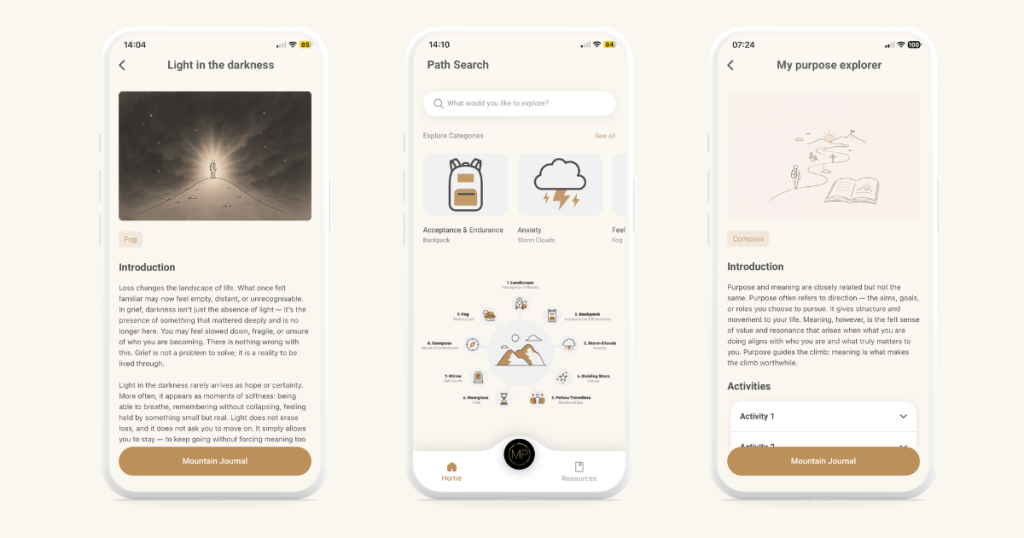
Sometimes journaling begins with a question.
At other times, journaling helps us discover the question we need to ask.
Path Search was created to support this process.
The free Path Search app helps you explore questions related to:
- Meaning and purpose
- Relationships
- Anxiety and uncertainty
- Self-worth
- Identity
- Values
- Personal growth
- Emotional wellbeing
Popular searches include:
- I feel lost
- What is my purpose?
- How do I trust myself?
- Why do I overthink?
- What is wrong with me?
- How do I find peace?
You can use Path Search alongside your journaling practice to deepen reflection and explore new perspectives.
Final Thoughts
If you have been wondering what to write in a writing journal, remember that there is no perfect place to begin.
You do not need profound insights.
You do not need the right words.
You do not even need answers.
You simply need a willingness to be curious about your own experience.
A journal can become a place to explore your thoughts, understand your emotions, clarify your values, strengthen your relationships, discover your purpose, and reconnect with what matters most.
Some days you may write a single sentence.
Other days you may fill several pages.
Both are valuable.
The purpose of journaling is not to create perfect entries.
The purpose is to develop a deeper relationship with yourself and your life.
So the next time you open a blank page and wonder what to write, start with a simple question:
What feels important right now?
Then begin.
Frequently Asked Questions
What should I write in a journal every day?
You can write about your thoughts, emotions, experiences, goals, relationships, challenges, gratitude, or anything that feels important to you. The most valuable journal entries are often the most honest.
What do beginners write in a journal?
Beginners often find prompts helpful. Start by describing how you are feeling, what happened during your day, what you are grateful for, or what is currently on your mind.
What are good journal prompts for self-discovery?
Questions such as “When do I feel most like myself?”, “What values matter most to me?”, and “What am I currently learning about myself?” can support self-discovery.
What should I write when I feel lost?
Try reflecting on what feels uncertain, what matters most to you, what support you need, and what small step you could take next. Journaling can help create clarity during periods of uncertainty.
Is journaling good for mental wellbeing?
Many people find journaling beneficial because it creates space for reflection, emotional processing, self-awareness, and personal growth. While it is not a substitute for professional support, it can be a valuable wellbeing practice.
How long should a journal entry be?
There is no ideal length. Some entries may be a few sentences, while others may be several pages. Consistency and honesty are generally more important than length.
What is the difference between a diary and a journal?
A diary often focuses on recording events. A journal typically involves deeper reflection on thoughts, emotions, experiences, values, and personal growth.