

Introduction
Self-worth influences how we relate to ourselves, others, and the world around us. When our self-worth feels strong, we are often better able to trust our decisions, set healthy boundaries, accept our imperfections, and navigate life’s challenges with resilience. When it feels fragile, we may become overly self-critical, compare ourselves to others, seek constant validation, or question whether we are truly enough.
Many people assume self-worth comes from achievement, appearance, success, or the approval of others. While these experiences can influence how we feel about ourselves, lasting self-worth is often built through a deeper relationship with who we are rather than what we accomplish.
Journaling can be a powerful tool for strengthening self-worth. Writing creates space to explore how we see ourselves, identify unhelpful beliefs, recognise our strengths, and reconnect with our authentic values and experiences.
This article focuses specifically on self-worth, self-acceptance, confidence, and authenticity through reflective writing. If you are looking for a broader exploration of identity, values, and personal growth, explore our guide to Self-Discovery Journaling. For a wider collection of reflective questions, visit our Journaling Prompts for Self-Discovery article.
The prompts below are designed to help you develop greater self-understanding, self-compassion, and confidence while building a healthier relationship with yourself.
Why Journaling Can Help Build Self-Worth
Many of us spend far more time evaluating ourselves than understanding ourselves. We notice our mistakes more readily than our strengths, focus on what is lacking rather than what is present, and often speak to ourselves in ways we would never speak to someone we care about.
Over time, these patterns can shape how we see ourselves. Self-worth becomes tied to performance, appearance, productivity, achievement, or the approval of others. When these external sources fluctuate, our confidence and sense of value may fluctuate with them.
Journaling offers an opportunity to slow down and step outside these automatic patterns. Through writing, we can examine the beliefs we hold about ourselves, recognise where those beliefs came from, and consider whether they truly reflect who we are.
From the perspective of Existential Analysis, self-worth is closely connected to the Third Fundamental Motivation (FM3): Authenticity and Self-Worth. This motivation asks a fundamental question:
Can I be myself, and do I have permission to be who I truly am?
When FM3 is supported, we tend to experience greater self-acceptance, confidence, authenticity, and inner stability. When it is challenged, we may struggle with self-doubt, shame, comparison, perfectionism, or a persistent feeling of not being enough.
It is also helpful to distinguish between confidence and self-worth. Confidence often relates to what we can do, while self-worth relates to how we value ourselves regardless of success or failure. Confidence may rise and fall depending on circumstances. Self-worth provides a deeper foundation from which confidence can grow.
The journaling prompts below are designed to help you explore your relationship with yourself more honestly and compassionately. You do not need to answer every question. Choose the prompts that resonate most strongly and allow yourself to write without judgment or pressure to find the “right” answer.
Journaling Prompts to Understand Your Relationship with Yourself
Before we can strengthen self-worth, it can be helpful to understand how we currently relate to ourselves. Many beliefs about our value operate quietly in the background, influencing our decisions, emotions, relationships, and behaviour without us fully noticing.
These prompts are designed to help you explore your self-perception with greater awareness and honesty.
- How would I describe my relationship with myself today?
- What words do I most often use when thinking about myself?
- What do I appreciate most about who I am?
- What do I criticise myself for most often?
- When I make a mistake, how do I typically respond to myself?
- What situations tend to trigger self-doubt or feelings of inadequacy?
- What achievements or qualities do I use to measure my worth?
- How much of my self-worth depends on the approval of other people?
- What messages about worth, success, or value did I learn growing up?
- Which of those messages still influence me today?
- What expectations do I place on myself that I would never place on someone I care about?
- If a close friend described themselves the way I describe myself, how would I respond?
- What parts of myself do I find easiest to accept?
- What parts of myself do I struggle to accept?
- What would change if I believed I was already enough as I am?
Many people discover that their harshest judgments are not objective truths but old beliefs, assumptions, or expectations that have been carried for years. Becoming aware of these patterns is often the first step towards building a healthier and more compassionate relationship with yourself.
If these reflections lead you into broader questions about identity, values, and personal growth, you may also find our guides to Self-Discovery Journaling and Journaling Prompts for Self-Discovery helpful companions on your journey.

Journaling Prompts for Self-Compassion and Acceptance
Many people believe that being hard on themselves will help them improve. Yet research and lived experience often suggest the opposite. Constant self-criticism can leave us feeling discouraged, anxious, and disconnected from our strengths, while self-compassion creates the safety needed for growth and change.
Self-compassion does not mean lowering standards, making excuses, or ignoring mistakes. Rather, it involves treating ourselves with the same understanding, patience, and humanity that we would offer to someone we care about.
These prompts are designed to help you cultivate greater self-acceptance and challenge overly harsh self-judgments.
- In what situations am I hardest on myself?
- What mistakes do I find difficult to forgive myself for?
- What would I say to a close friend facing the same struggle I am experiencing?
- Why is it often easier to show compassion to others than to myself?
- What unrealistic expectations am I placing on myself?
- What am I trying to prove, and to whom?
- What parts of my story deserve more understanding and compassion?
- What have I survived, endured, or overcome that I rarely acknowledge?
- What personal qualities have helped me through difficult times?
- If I spoke to myself with kindness for one day, what might change?
- What would self-acceptance look like in my life right now?
- What aspects of myself am I still learning to embrace?
- What does being “good enough” mean to me?
- How would my life change if I stopped demanding perfection from myself?
- What is one act of kindness I can offer myself today?
Many people discover that self-worth begins to grow not when they become someone different, but when they learn to relate differently to themselves. Self-compassion does not remove challenges, mistakes, or imperfections. It simply allows us to face them without abandoning ourselves in the process.
If you find yourself struggling to notice what is already good, valuable, or supportive in your life, you may also find our articles on Gratitude Prompt and Prompts for a Gratitude Journal helpful. Gratitude and self-compassion often work together, helping us shift attention away from constant self-criticism and towards a more balanced perspective on ourselves and our lives.
Journaling Prompts to Recognise Your Strengths and Value
When self-worth is low, we often become experts at noticing our shortcomings while overlooking our strengths. We may focus on what we have not achieved, where we have fallen short, or how we compare to others, while paying little attention to the qualities, efforts, and contributions that already exist within us.
Recognising your strengths is not about arrogance or self-importance. It is about developing a more balanced and realistic view of yourself. Self-worth grows when we learn to acknowledge both our imperfections and our value.
These prompts are designed to help you reconnect with your strengths, character, and unique contributions.
- What qualities do I admire most about myself?
- What strengths have helped me navigate difficult periods in my life?
- What challenges have I overcome that demonstrate resilience or courage?
- What do people often appreciate about me?
- What positive feedback do I tend to dismiss or minimise?
- What am I proud of, even if nobody else knows about it?
- What personal qualities would I like to be remembered for?
- How have I positively influenced the lives of others?
- What acts of kindness, generosity, or support have I offered recently?
- What skills or talents come naturally to me?
- What achievements have I overlooked because I immediately moved on to the next goal?
- What would a close friend say are my greatest strengths?
- What values do I consistently try to live by?
- What challenges have helped shape me into the person I am today?
- What unique perspective, experience, or gift do I bring to the world?
- What evidence exists that I am more capable than I sometimes believe?
- What would change if I trusted my strengths more often?
- What contribution am I already making through the way I live, work, or relate to others?
Many people spend years searching for something that will finally make them feel worthy. Yet self-worth often begins to grow when we recognise that our value is not something we must earn. It is something we can learn to acknowledge, appreciate, and build upon.
Rather than asking, “What is wrong with me?” these reflections invite a different question:
What is already present within me that I have forgotten to see?
Journaling Prompts to Live More Authentically
Self-worth and authenticity are deeply connected. Many people struggle with self-worth not because they lack value, but because they have become disconnected from who they truly are. They spend so much energy meeting expectations, avoiding criticism, pleasing others, or fitting in that they gradually lose touch with their own needs, values, and preferences.
Authenticity does not mean expressing every thought or rejecting the needs of others. Rather, it involves living in a way that feels genuinely aligned with who you are and what matters most to you.
These prompts are designed to help you explore where you may be living authentically and where you may be compromising yourself in ways that affect your self-worth.
- When do I feel most like myself?
- What situations make me feel that I have to hide parts of who I am?
- Where in my life am I trying to gain approval from others?
- What expectations am I currently carrying that do not truly belong to me?
- What values feel most important to me at this stage of my life?
- How closely does my daily life reflect those values?
- What do I often say “yes” to when I really want to say “no”?
- What boundaries would support my wellbeing right now?
- In which relationships do I feel accepted for who I am?
- In which relationships do I feel pressure to be someone else?
- What parts of my personality have I neglected or suppressed?
- What interests, passions, or dreams have I set aside?
- What am I pretending not to know about myself?
- What would I do differently if I trusted my own judgment more?
- Where am I comparing myself to others instead of listening to my own path?
- What does authenticity mean to me personally?
- What would living more authentically look like over the next month?
- What is one small step I could take towards being more fully myself?
From the perspective of Existential Analysis, authenticity is not about becoming perfect. It is about developing the courage to live in accordance with your own values, experiences, and understanding of what matters.
Many people discover that self-worth begins to strengthen when they stop asking:
“How can I become more acceptable?”
and start asking:
“How can I become more fully myself?”
This shift often marks an important turning point. Rather than constantly seeking validation from the outside world, we begin building a relationship with ourselves that is grounded in honesty, acceptance, and authenticity.
Journaling Prompts to Build Confidence and Trust Yourself
Confidence is often misunderstood. Many people believe confidence comes first and action follows. In reality, confidence is frequently built through experience. It develops when we take small steps, make decisions, learn from mistakes, and discover that we are more capable than we initially believed.
Self-worth and confidence are closely related, but they are not the same thing. Self-worth is the belief that you have value as a person. Confidence is the belief that you can handle situations, challenges, and opportunities. Healthy confidence tends to grow from a foundation of self-worth rather than from constant success or approval.
These prompts are designed to help you strengthen self-trust and develop confidence that is grounded in authenticity rather than perfection.
- What decisions have I made in the past that turned out well?
- What challenges have I successfully navigated that once felt overwhelming?
- What evidence exists that I am more capable than I sometimes believe?
- When have I trusted myself and been glad that I did?
- What situations make me doubt myself most often?
- What am I afraid might happen if I trust my own judgment?
- What mistakes have taught me valuable lessons?
- How do I typically respond when something does not go according to plan?
- What would I attempt if I trusted myself a little more?
- What strengths can I rely on when facing uncertainty?
- What advice would my future self give me about the situation I am facing today?
- What small risk would help me grow?
- Where in my life am I waiting for certainty before taking action?
- What action could I take even without complete confidence?
- What achievements have I dismissed or minimised?
- How would I behave if I believed I was already capable enough?
- What is one decision I can make today without seeking reassurance from others?
- What would trusting myself look like over the coming week?
Many people wait for confidence to appear before moving forward. Yet confidence often emerges through movement itself. Each time we act despite uncertainty, keep a promise to ourselves, set a healthy boundary, or make a choice that aligns with our values, we strengthen trust in our own abilities.
Self-worth reminds us that we are valuable regardless of the outcome. Confidence grows when we repeatedly discover that we can meet life as it is, learn from our experiences, and continue moving forward.
Rather than asking:
“How can I become more confident?”
you might explore a different question:
“What would I do today if I trusted myself a little more?”
Using the Four Fundamental Motivations to Strengthen Self-Worth
While self-worth is closely connected to authenticity and self-acceptance, it rarely develops in isolation. The way we feel about ourselves is often influenced by other areas of our lives, including our sense of safety, our relationships, our values, and our sense of meaning.
Within Existential Analysis, the Four Fundamental Motivations offer a helpful framework for understanding these deeper foundations of wellbeing.
As you reflect on the prompts throughout this article, consider which of these areas may need the most attention right now.
FM1: Space, Protection, and Support
It is difficult to develop self-worth when we feel constantly unsafe, unsupported, or overwhelmed.
Reflective questions:
- Do I feel supported by the people around me?
- Where do I need more protection, boundaries, or self-care?
- What helps me feel grounded and secure?
- What support am I reluctant to ask for?
FM2: Fulfilment and Values
Self-worth often grows when we engage with people, activities, and experiences that feel genuinely valuable.
Reflective questions:
- What brings me a sense of fulfilment?
- What values matter most to me?
- Where do I experience appreciation, connection, or joy?
- What parts of life feel most meaningful and alive?
FM3: Authenticity and Self-Worth
This article has focused primarily on FM3 and the question:
Can I be myself, and do I have permission to be who I truly am?
Reflective questions:
- Where am I living authentically?
- Where am I seeking approval rather than self-acceptance?
- What strengths have I forgotten?
- What would self-respect look like today?
FM4: Meaning and Purpose
Self-worth is strengthened when we feel that our lives matter and that we are contributing to something meaningful.
Reflective questions:
- What gives my life a sense of purpose?
- How do I want to contribute to others?
- What feels worth investing my energy in?
- What is life asking of me right now?
Sometimes low self-worth is not simply a confidence issue. It may reflect unmet needs in one or more of these areas. By exploring the Four Fundamental Motivations, we can begin to understand ourselves more fully and identify where growth, healing, or change may be needed.
If you would like support exploring questions about self-worth, relationships, meaning, values, and personal growth, consider using Path Search (look for the compass icon). Path Search provides free guided reflections inspired by the Four Fundamental Motivations and the Meaningful Paths framework.
To deepen your reflections, you can also use the Mountain Journal, which was designed to accompany Path Search and provide space to record insights, questions, actions, and discoveries throughout your personal journey.
Free Purpose Explorer Tool:
🧭 A free reflective search tool
Grounded in the Mountain Framework
Explore Free → Path Search – Meaningful Paths
When Self-Worth Depends on External Validation
Most people enjoy encouragement, appreciation, and positive feedback. There is nothing wrong with wanting to feel valued by others. Difficulties can arise, however, when our sense of worth becomes dependent upon external approval.
When self-worth relies heavily on validation, our confidence may rise and fall according to how others respond to us. Praise can feel uplifting, while criticism, rejection, disagreement, or even silence can feel deeply unsettling. We may find ourselves constantly seeking reassurance, comparing ourselves to others, or worrying about how we are perceived.
Over time, this can become exhausting. Instead of asking, “What do I think?” we begin asking, “What will others think?” Instead of living according to our values, we may start shaping our lives around approval, acceptance, or fear of rejection.
These prompts are designed to help you explore your relationship with external validation and strengthen your connection to your own inner voice.
- How much of my self-worth depends on the opinions of other people?
- Whose approval do I seek most often?
- What am I hoping their approval will give me?
- What situations make me feel most concerned about what others think?
- What criticism do I find hardest to tolerate?
- What compliments or positive feedback do I find difficult to believe?
- How do I respond when someone disagrees with me?
- What decisions have I made primarily to gain approval from others?
- What opportunities have I avoided because I feared judgment?
- What would I do differently if I worried less about how I was perceived?
- What qualities do I value in myself that exist regardless of other people’s opinions?
- What personal values matter to me even when they are not recognised by others?
- When have I felt proud of myself without needing external praise?
- What would self-validation look like in my daily life?
- What is one area of my life where I can trust my own judgment more?
Healthy self-worth does not require us to ignore feedback or reject the opinions of others. Rather, it allows us to listen to feedback without letting it determine our value as a person.
As self-worth grows, we become less dependent on constant reassurance and more able to recognise our own strengths, values, and contributions. Approval becomes something we appreciate rather than something we desperately need.
A helpful question to carry forward is:
If nobody else’s opinion could define my worth, how would I choose to see myself?
Self-Worth Grows Through Your Relationship With Yourself
Many people spend years searching for something that will finally make them feel worthy. They hope that greater success, achievement, recognition, confidence, appearance, or approval will provide the lasting sense of value they have been seeking.
While these experiences can feel rewarding, self-worth rarely develops through external achievements alone. Lasting self-worth grows through the relationship we build with ourselves. It develops when we learn to treat ourselves with compassion, recognise our strengths, live according to our values, trust our own judgment, and allow ourselves to be authentically human.
This does not mean self-doubt disappears completely. Most people continue to experience moments of insecurity, criticism, comparison, or uncertainty throughout life. The difference is that these experiences no longer define who they are.
Journaling can support this process by creating space for reflection, honesty, and self-understanding. Over time, the questions you ask yourself may become just as important as the answers you discover.
Rather than asking:
“How can I become worthy?”
you may begin asking:
“How can I recognise the worth that already exists within me?”
This shift often marks the beginning of a healthier and more authentic relationship with yourself.
If you would like additional support exploring questions about self-worth, meaning, relationships, values, and personal growth, consider using Path Search (look for the compass icon). Path Search offers free guided reflections inspired by Existential Analysis, the Four Fundamental Motivations, and the Meaningful Paths framework.
To deepen your reflections, you can also download the Mountain Journal, which was specifically designed to accompany Path Search. Together, they provide a practical way to explore meaningful questions, capture personal insights, and continue your journey of self-discovery and growth.
Self-worth is not something you earn once and keep forever. It is a relationship that can be strengthened, nurtured, and renewed throughout life—one reflection, one choice, and one step at a time.
Related Resources for Self-Worth, Self-Discovery, and Personal Growth
If you found these journaling prompts helpful, you may also enjoy exploring the following resources:
Self-Discovery Journaling: A Reflective Guide to Meaning, Identity, and Personal Growth
This guide explores how journaling can support self-understanding, personal growth, values exploration, and identity development. It provides a broader introduction to reflective writing and its role in building a meaningful life.
Self-Discovery Journaling: Meaning, Identity & Personal Growth
Journaling Prompts for Self-Discovery
Looking for additional reflective questions? This collection contains prompts designed to help you understand yourself more deeply, explore your values, identify recurring patterns, and gain greater clarity about your life direction.
Journaling Prompts for Self Discovery: 40 Questions for Personal Growth
What to Write in a Writing Journal
Not sure what to write about? This guide offers practical ideas, prompts, and starting points to help you begin journaling, even when you are facing a blank page.
What to Write in a Writing Journal: 50 Prompts for Self-Discovery
Journaling Prompts for When You Feel Lost in Life
If self-worth struggles are connected to uncertainty, transition, or a lack of direction, this article offers reflective prompts designed to help you reconnect with meaning, values, and purpose.
Journaling Prompts for When You Feel Lost in Life and Need Direction
Gratitude Prompt: Meaningful Reflections for Presence, Peace, and Emotional Grounding
Self-worth can sometimes become distorted when we focus exclusively on our shortcomings. Gratitude prompts encourage us to recognise what is already supportive, valuable, and meaningful in our lives, helping to create a more balanced perspective.
Gratitude Prompt: Meaningful Reflections for Peace & Presence
Prompts for a Gratitude Journal
If you would like to develop a regular gratitude journaling practice, this collection provides writing prompts designed specifically for gratitude-focused reflection and daily journaling.
Prompts for Gratitude Journal: Meaning, Peace & Purpose
Living a Purposeful Life
A meaningful life is not built on self-worth alone. This guide explores how purpose, values, relationships, and daily choices contribute to a deeper sense of fulfilment and direction.
Living a Purposeful Life: Meaning, Values and Fulfillment
Purpose Driven Life: Meaning, Values, and Direction
This article explores how purpose can provide direction and orientation throughout life, helping us make decisions that align with our values and what matters most.
The Purpose Driven Life: Meaning, Values, and Direction
Continue Your Journey with Path Search and the Mountain Journal
If you would like support exploring questions about self-worth, authenticity, meaning, relationships, and personal growth, try Path Search (look for the compass icon). Path Search provides free guided reflections inspired by Existential Analysis, the Four Fundamental Motivations, and the Meaningful Paths Mountain Framework.
To deepen your reflections, download the Mountain Journal, which was specifically designed to accompany Path Search. Together, they provide a practical space to explore meaningful questions, record insights, and continue your journey of self-discovery and growth.
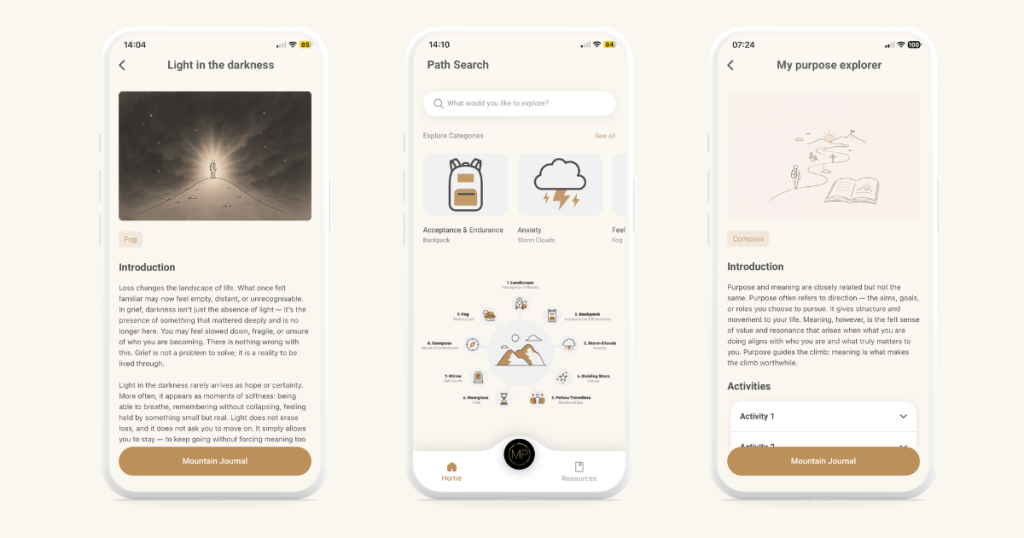
Free Purpose Explorer Tool:
🧭 A free reflective search tool
Grounded in the Mountain Framework
Explore Free → Path Search – Meaningful Paths
Article Featured Image Reference – https://pixabay.com/users/markusspiske
Frequently Asked Questions
How can journaling help improve self-worth?
Journaling creates space to explore how you see yourself, identify self-critical patterns, recognise your strengths, and develop greater self-understanding. Over time, reflective writing can help you build a more balanced, compassionate, and realistic relationship with yourself.
Can journaling improve self-esteem and confidence?
Many people find that journaling helps improve both self-esteem and confidence. By reflecting on your experiences, strengths, achievements, values, and personal growth, you can develop greater trust in yourself and a stronger sense of self-worth.
What is the difference between self-worth and confidence?
Self-worth refers to the value you place on yourself as a person. Confidence relates to your belief in your ability to handle situations, challenges, or tasks. Confidence may change depending on circumstances, while self-worth provides a deeper foundation that remains present even when confidence fluctuates.
Why do I rely so much on validation from others?
Seeking approval is a normal human experience. However, when self-worth becomes heavily dependent on external validation, criticism, rejection, or disagreement can feel particularly painful. Reflective journaling can help you strengthen your internal sense of worth and become less dependent on constant reassurance.
How often should I journal for self-worth?
There is no perfect schedule. Some people benefit from journaling daily, while others prefer a few times each week. Consistency is usually more important than frequency. Even ten minutes of honest reflection can support meaningful growth over time.
What should I write about if I struggle with self-worth?
You might explore questions about self-criticism, strengths, values, authenticity, confidence, relationships, boundaries, or personal achievements. The prompts throughout this article provide a range of starting points depending on where you are in your journey.
What are the Four Fundamental Motivations?
The Four Fundamental Motivations come from Existential Analysis and describe four core areas of human fulfilment:
- FM1: Space, Protection, and Support
- FM2: Fulfilment and Values
- FM3: Authenticity and Self-Worth
- FM4: Meaning and Purpose
Together, they provide a framework for understanding wellbeing, personal growth, and meaningful living.
Can journaling help with self-acceptance?
Yes. Journaling can help you notice self-critical patterns, challenge unrealistic expectations, recognise your humanity, and cultivate greater self-compassion. Many people find that self-acceptance develops gradually as they learn to relate to themselves with more understanding and less judgment.
How long does it take to build self-worth?
Building self-worth is usually an ongoing process rather than a single breakthrough moment. Small shifts in self-awareness, self-compassion, authenticity, and self-trust often accumulate over time, creating lasting changes in how we relate to ourselves.
How can Path Search and the Mountain Journal support self-worth?
Path Search provides free guided reflections inspired by Existential Analysis, the Four Fundamental Motivations, and the Meaningful Paths framework. The Mountain Journal was designed to accompany Path Search, offering a dedicated space to record insights, reflections, actions, and discoveries as you continue your journey of self-understanding and personal growth.