

Journaling can be one of the most powerful tools for self-understanding. When we take the time to pause and write honestly about our experiences, thoughts, and emotions, we begin to see patterns that are often invisible in the busyness of daily life.
Many people turn to journaling prompts for self discovery when they feel uncertain about their direction, disconnected from themselves, or curious about what truly matters in their lives. Rather than searching for quick answers, journaling invites reflection. It allows space for deeper questions to emerge and for meaningful insights to develop over time.
In this guide, we explore thoughtful journaling prompts for self discovery, along with reflections that can help you reconnect with your values, emotions, and sense of purpose.
Looking for a complete introduction to self-discovery journaling? Start with our guide to Self-Discovery Journaling before exploring these prompts.
Self-discovery journaling guide >
Why Journaling Supports Self Discovery
Writing helps bring clarity to thoughts that often feel tangled or overwhelming in our minds. When we write without judgment, we begin to notice recurring themes in our experiences — our fears, hopes, values, and patterns of decision-making.
Using journaling prompts for self discovery encourages us to move beyond surface-level thinking. Instead of simply recording events, prompts guide us toward deeper questions about who we are and how we relate to the world around us.
Journaling can support:
- emotional awareness
- personal growth
- decision clarity
- understanding values and priorities
- reconnecting with meaning and purpose
Over time, regular journaling can become a quiet but powerful practice of self-reflection.

Journaling Prompts for Self Discovery
The following journaling prompts for self discovery invite you to explore different aspects of your life and identity. You may choose one prompt at a time or return to the questions whenever you feel the need for reflection.
Understanding Yourself
- When do I feel most like myself?
- What parts of my life currently feel most aligned with who I am?
- What situations make me feel disconnected from myself?
- What qualities do I value most in the person I want to become?
Exploring Life Direction
- What currently gives my life a sense of meaning?
- What parts of my life feel uncertain or unclear right now?
- If fear were not guiding my decisions, what might I choose differently?
- What would a meaningful next step in my life look like?
Reflecting on Personal Growth
- What have I learned about myself in the past year?
- What challenges have shaped who I am today?
- Where do I feel ready for change or growth?
- What does personal growth mean to me at this stage of my life?
These journaling prompts for self discovery are not meant to produce perfect answers. Their purpose is to open space for reflection.
Journaling Prompts for Anxiety and Emotional Clarity
Many people also use journaling as a way to process emotions. Writing can help bring calm to thoughts that feel overwhelming.
If you are feeling anxious or uncertain, these journaling prompts for anxiety may help create perspective:
- What is currently worrying me the most?
- What might my thoughts be trying to protect me from?
- What would I say to a friend experiencing the same worry?
- What small step could help me feel more grounded right now?
These types of journaling prompts mental health practices can help us slow down and understand our emotional experiences with greater compassion.
Journaling Through the Four Fundamental Motivations
At Meaningful Paths, we often explore reflection through the Four Fundamental Motivations of Existential Analysis, developed by Viktor Frankl and Alfried Längle.
These motivations offer a helpful structure for self-discovery.
FM1. Do I have the necessary space, protection, and support in the world?
FM2. Do I experience fulfillment, affection, and appreciation of values?
FM3. Do I relate authentically to myself and others?
FM4. Do I engage in what is meaningful and purposeful?
You might explore these questions through journaling:
FM1 Reflection
Where in my life do I feel safe and supported?
Where do I feel restricted or pressured?
FM2 Reflection
What experiences bring genuine fulfillment to my life?
Where do I feel my values are honoured?
FM3 Reflection
In what situations do I feel most authentic?
Where do I struggle to express my true thoughts or feelings?
FM4 Reflection
What activities or commitments give my life meaning?
What feels worth investing energy in right now?
These reflections often lead to deeper insights than simple goal-setting exercises.
What would you like to explore today?
Search meaning, purpose, self-worth, relationships, or life direction…Free guided reflections with 🧭 Path Search.
Turning Reflection Into Action
While journaling encourages exploration, many people eventually want to translate insights into meaningful action. Writing about your experiences may reveal patterns, values, or priorities that guide your next steps.
For example, you might notice:
- recurring themes about what matters most to you
- situations that consistently drain or energise you
- relationships that support or challenge your growth
Recognising these patterns can help shape decisions about where to invest your time and attention.
Using a Personal Growth Plan to Clarify Your Direction
After exploring journaling prompts for self discovery, many people find it helpful to organise their reflections into a clearer structure.
One way to do this is through a personal growth plan template, which helps bring together:
- where you currently are
- what circumstances shape your life
- what choices you want to make moving forward
- what gives your life meaning
You can explore a simple and flexible template here:
https://www.meaningfulpaths.com/sample-personal-growth-plan-with-a-simple-template/
This personal growth plan template builds naturally on journaling reflections and helps translate insight into small, meaningful steps.
If you’re looking for simple reminders that steady the mind, explore these short sayings about life –
Short Sayings About Life That Bring Clarity & Direction
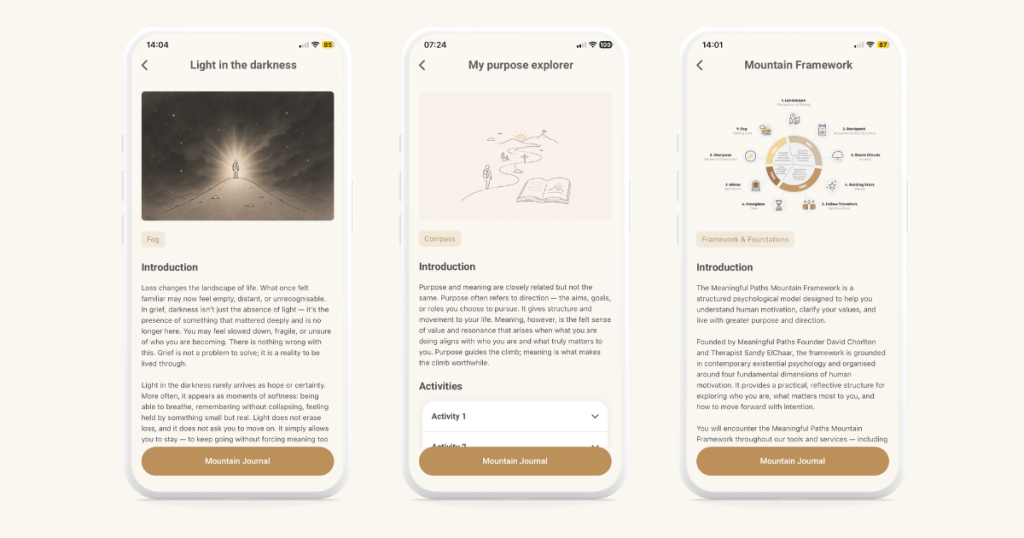
🧭 Continue Your Self-Discovery Journey with Path Search
Journaling prompts can help you uncover new insights, recognise patterns, and explore questions that matter.
Sometimes, however, one reflection leads to another.
You may find yourself wondering:
- Who am I beyond my roles and responsibilities?
- What truly matters to me?
- Why do I feel stuck or uncertain?
- What values guide my decisions?
- How do I find more meaning and direction in life?
Path Search is a free reflective companion app designed to help you explore these questions through guided reflections and practical activities inspired by Existential Analysis and the Mountain Framework.
Popular self-discovery searches include:
- How do I find myself?
- What are my values?
- How do I build self-worth?
- Why do I feel lost?
- How do I find purpose?
- What should I do with my life?
- How can I trust myself?
Each search provides meaningful reflections and practical activities designed to help you move from uncertainty towards greater self-understanding, clarity, and purposeful action.
Download Path Search and continue exploring the questions that matter most.
Going Deeper With Guided Reflection
If journaling prompts resonate with you, you may also find it helpful to explore more structured reflection exercises.
The Quest for Meaning ebook includes ten guided exercises inspired by existential analysis. These reflections invite you to explore questions about purpose, direction, values, and the meaning of your experiences.
Rather than offering quick answers, the exercises are designed to help you sit with deeper questions and discover insights at your own pace.
Learn more here:
https://www.meaningfulpaths.com/quest-for-meaning-ebook-2/

Returning to Your Journal
Self-discovery rarely happens in a single moment. It unfolds gradually as we reflect on our experiences, relationships, and decisions.
Returning regularly to journaling prompts for self discovery can help you notice how your perspectives change over time. Some answers may remain stable, while others evolve as your life circumstances shift.
Journaling is not about finding perfect clarity. Instead, it creates space to explore questions that matter — and to stay connected to the deeper currents shaping your life.
Featured image – https://www.pexels.com/@benjaminfarren
Continue Your Journey
Explore your question further with 🧭 Path Search, our free guided reflection tool for meaning, purpose, self-worth, relationships, and life direction.
You can also use the Mountain Journal, designed to accompany Path Search and help you record insights, reflections, and next steps.