
According to existential therapist Sandy ElChaar, creativity is not only about artistic ability — it can also become a pathway back to meaning, emotional presence, and self-connection during stressful periods of life. Within the Meaningful Paths Mountain Framework, creative expression can help people process emotional experiences, reconnect with their values, and rediscover direction when they feel overwhelmed, emotionally numb, or disconnected from themselves.
At Meaningful Paths, creativity is viewed as more than artistic expression — it can become a way of reconnecting with meaning, identity, and emotional presence during stressful or uncertain periods of life. Through the Meaningful Paths Mountain Framework, Path Search app, and reflective tools such as the Mountain Journal, people are encouraged to explore creativity not as performance, but as a pathway toward self-understanding, values, purpose, and emotional wellbeing. Sandy ElChaar’s article on Mindful Colouring: A Path to Presence and Purpose also explores how simple creative practices can help people slow down, reconnect with themselves, and rediscover moments of meaning, calm, and purpose through creativity.
🧭 🧭 🧭 🧭
Stress Less with Simple Creative Practices Anyone Can Try
Written by Amber Speck – Home | Write About Recovery
Busy parents juggling work and caregiving, frontline helpers, and overextended team leads know the stress spiral that starts small and ends with a tight chest, a short fuse, and a mind that won’t settle. The hard part isn’t a lack of willpower, it’s that the nervous system gets stuck on “go,” and most stress management strategies feel like one more task to perform correctly. Creative stress relief offers a gentler option: a few minutes of mindfulness and artistic expression that meets the moment without requiring talent. Emotional regulation through creativity can become a steady, quiet reset.
Make Calm Visuals in 5 Minutes With AI-Assisted Art
When your mind feels too loud to come up with an idea, borrowing a little spark can be its own form of relief. Creating art with an AI image generator can be a gentle, low-pressure experiment, more like breathing space than a performance. With Adobe Firefly’s AI art generator, you can type a descriptive text prompt that spells out the image you’re imagining, then shape what comes back by tweaking settings like style, color, lighting, and aspect ratio until the visuals feel soothing to you. There’s no “right” result to chase; you’re simply making variations and noticing which ones help your shoulders drop.
How Making Art Calms Your Nervous System
Therapeutic art practices help because they shift your brain from scanning for problems to staying with one doable moment. When you get absorbed in the process, creative flow makes concentration feel natural and self-criticism turns down. Meaning-making is the final piece: you turn a vague feeling into something you can see, name, and gently reshape.
This matters because stress often thrives on scattered attention and trapped emotions. A small creative act gives your mind a single channel, so your body can read it as safety. Over time, lowered rates of stress can be a real, lived outcome, not just a nice idea.
Picture a tense evening where everything feels like too much. You choose a simple sketch or collage, and your focus narrows to color, line, and placement. By the end, you have a quiet record of what you felt, plus proof you moved through it. With that mechanism clear, it’s easier to choose calming activities that match your energy and attention.
Choose Beginner Creative Outlets for Stress Relief
When stress is loud, I do better with a menu than a “perfect plan.” Pick one or two beginner-friendly creative activities below, keep the time small, and notice what helps your nervous system settle into focus, flow, or gentle meaning-making.
- Try a 10-minute “messy sketch” warm-up: Set a timer for 10 minutes and fill a page with loops, scribbles, zigzags, or shading, no subject required. This works because your attention has one simple job, which can interrupt rumination and give your body a small dose of calm focus. If perfection shows up, label it (“my inner critic”) and keep moving your hand anyway.
- Make a comfort-color palette with simple coloring: Choose 3–5 colors that feel safe or steady today and color one small shape repeatedly (circles, tiles, stripes). The repetition supports regulation the same way steady breathing does, predictable, contained, and not too demanding. If you want a prompt, assign meanings: “blue = rest,” “green = enough,” “yellow = hope.”
- Do a one-square collage (tiny and doable): Tear or cut a handful of images/words from flyers, magazines, or printouts and glue them into a 4×4-inch square. Limiting space helps your brain feel “finished,” which is soothing when life feels endless. If you’re unsure what to choose, pick by body cue: “Which image makes my shoulders drop?”
- Fold paper for calm (origami-lite): Start with one easy fold, boats, hearts, or simple boxes, using any scrap paper. The step-by-step sequence gently occupies your working memory, which can reduce mental spiraling. Keep a small stack of finished folds where you’ll see them as proof you can make something in the middle of a hard day.
- Use a sensory craft kit you already own: String beads, knit a few rows, shape clay, or do a small hand-sewing repair. These arts and crafts for relaxation work well because your hands get rhythmic input while your mind rests in “just this stitch” mode. A helpful rule: stop while it still feels soothing, even if you’re not “done.”
- Try an expressive arts therapy–style “two-hand dialogue”: With two colors, write one sentence with your dominant hand (the “stressed voice”), then respond with your non-dominant hand (the “supportive voice”). Many people use expressive approaches to find clarity, purpose, and peace, and this prompt keeps it simple and contained. End with one kind action step your supportive voice suggests.
- Build a personal playlist, then draw to it: Pick 3 songs: one that matches your mood, one that steadies you, one that lifts you. While each song plays, draw lines that track the sound, thick for loud, thin for quiet, sharp for tense, curved for soft. This is a low-pressure creative hobby for mental health because it lets feelings move without needing the “right” words.
- Start a gentle photo-based ritual: Choose 10 photos on your phone that feel grounding, pets, places, textures, small joys, and put them in one album. Curating images gives your brain a safe storyline to hold onto when stress wants to tell only worst-case stories. Later, those photos can become the raw material for a meaningful collage that helps you process feelings without pushing too hard.
Build a Meaningful Photo Collage to Process Feelings Gently
If you’ve been sampling a few beginner-friendly outlets, photo collaging can be the one that feels quiet, familiar, and personal. Creating a photo collage can be a calming way to revisit positive memories while giving your emotions somewhere to land visually, without needing to “find the right words.” As you gather everyday photos and place them together, the process becomes its own gentle reflection: you’re noticing what comforts you, what you miss, what you’re proud of, what you’re still carrying. Many people find that photo collage guidance helps keep the experience simple and soothing while still making the final piece feel intentional.
What elevates it into a polished, high-end keepsake isn’t fancy tools, it’s small, steady choices: a balanced composition that gives your eyes room to rest, an elegant color palette that creates a mood, and subtle text accents that quietly name what the images mean to you. And if doubt shows up (“Is this good enough?”), the next section will help you move through that stuck feeling with kindness.
Creative Stress-Relief Questions, Answered
Q: What if I’m not “good at art” and it stresses me out more?
A: You do not need talent for this to work. Choose process-first actions like tearing paper, sorting images, or adding one calming color, then stop. If judgment shows up, label it “inner critic,” and return to one simple step.
Q: How long do I need to create for it to actually help?
A: Even short sessions can shift your nervous system if you keep them gentle and doable. Many people start with 5 to 10 minutes, then build consistency. Research noting 45 minutes of creative activity reduces cortisol levels can be motivating, but you do not have to hit that mark to benefit.
Q: What should I do when I hit a creative block mid-page?
A: Switch to a “no-decisions” move: trace your hand, make a border, or place three shapes on the page. Set a timer for two minutes and give yourself permission to quit when it rings. Blocks often soften once your body feels safe, not once you force ideas.
Q: Why does self-criticism get louder when I’m journaling creatively?
A: Creativity can bring up vulnerability because you are making something visible. Try a compassionate caption like, “This is practice, not proof,” and keep going small. Limiting your tools to one pen and two colors can reduce comparison.
Q: Can looking at art help on days I cannot make anything?
A: Yes, receiving can be restorative when creating feels like too much. The finding that cortisol fell by 22 percent after viewing original art supports the idea that gentle exposure still counts. Save a small “soothing images” album and scroll it slowly, breathing out longer than you breathe in.
Understanding Stress-State Matching for Creativity
When you want relief, match the art to your stress state, not your ideal self. Do a quick check in: are you overwhelmed, numb, or restless? Then choose a practice that fits your energy and emotional needs, so you stop fighting your own nervous system.
This matters because the wrong activity can feel like one more demand, even if it is “easy.” Picking a better-fit option makes it more likely you will return tomorrow, which is where steadier change grows. Ideas from art therapy supports emotional regulation, avoidance, approach, and self-development, engaging with emotions help explain why different modes work for different moments.
Think of it like choosing shoes for the day. Overwhelmed calls for low-choice soothing, like repeating one line or filling one shape. Numb may need gentle stimulation, while restless often benefits from movement-based expressive arts, creative practices, exploration and reflection.
Building Calm Through One Repeatable Creative Ritual
Stress doesn’t show up politely, and it can be hard to know what to do when the body is overwhelmed, numb, or restless. The steadier path is stress-state matching, meeting the moment with a small creative practice that fits the energy that’s actually here, then returning to it with gentle consistency. Over time, the long-term benefits of creative pursuits add up: ongoing creative engagement builds confidence, supports sustained stress management techniques, and offers a quiet kind of empowerment through art. Small creative rituals turn survival-mode days into something you can steer. Choose one tiny, repeatable practice this week and return to it the next time stress shifts. That’s how the transformative power of creativity becomes a durable form of stability and resilience.
Written by Amber Speck – Home | Write About Recovery
🧭 🧭 🧭 🧭
Creativity and Purpose with Path Search
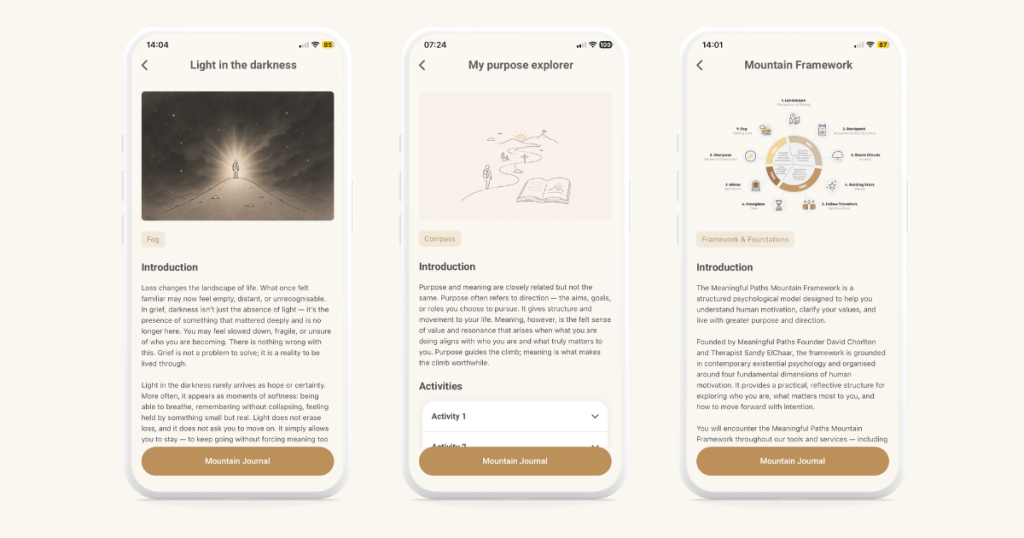
🧭 A free reflective search tool
Grounded in the Mountain Framework
If you are trying to reconnect with yourself, rediscover purpose, or better understand what gives your life meaning, the Path Search app and Meaningful Paths Mountain Framework offer reflective tools and guided activities designed to help you navigate periods of stress, uncertainty, and transition.
Explore Free → Path Search – Meaningful Paths
Creativity, Meaning, and the Meaningful Paths Mountain Framework
Within the Meaningful Paths Mountain Framework, creativity is not viewed simply as productivity or artistic talent — it is understood as a way of reconnecting with meaning, identity, and emotional presence. During stressful or uncertain periods of life, many people begin to feel disconnected from themselves, as though they are walking through fog without a clear sense of direction.
Creative practices can act as a pause along the mountain path.
Whether through writing, painting, music, gardening, photography, cooking, crafting, or simple acts of self-expression, creativity often helps people reconnect with parts of themselves that have been buried beneath pressure, routine, grief, burnout, or emotional overwhelm. These moments of expression can help lighten the emotional “backpack” we carry and reconnect us with our guiding stars — our values, needs, and deeper sense of purpose.
According to existential therapist Sandy ElChaar, creativity can become a bridge between stress and meaning. It reminds us that we are not only here to survive life mechanically, but also to experience, express, relate, create, and live authentically.
If you are exploring questions of meaning, purpose, identity, or emotional wellbeing, you may also find these resources helpful:
- Living a Purposeful Life
- What Are Values? A Reflective Guide to Meaning, Direction, and Living Authentically
- Reconnecting With Purpose After a Major Life Change
- Meditation for Existential Crisis: Finding Meaning When Everything Feels Uncertain
You can also explore these ideas more deeply through the Path Search app and the Meaningful Paths Mountain Framework, designed to help people navigate periods of uncertainty, transition, anxiety, and self-discovery with greater clarity and meaning.
You may find these additional prompts helpful:
Journaling Prompts for Self-Discovery →
Journaling Prompts for Self Discovery: 40 Questions for Personal Growth