
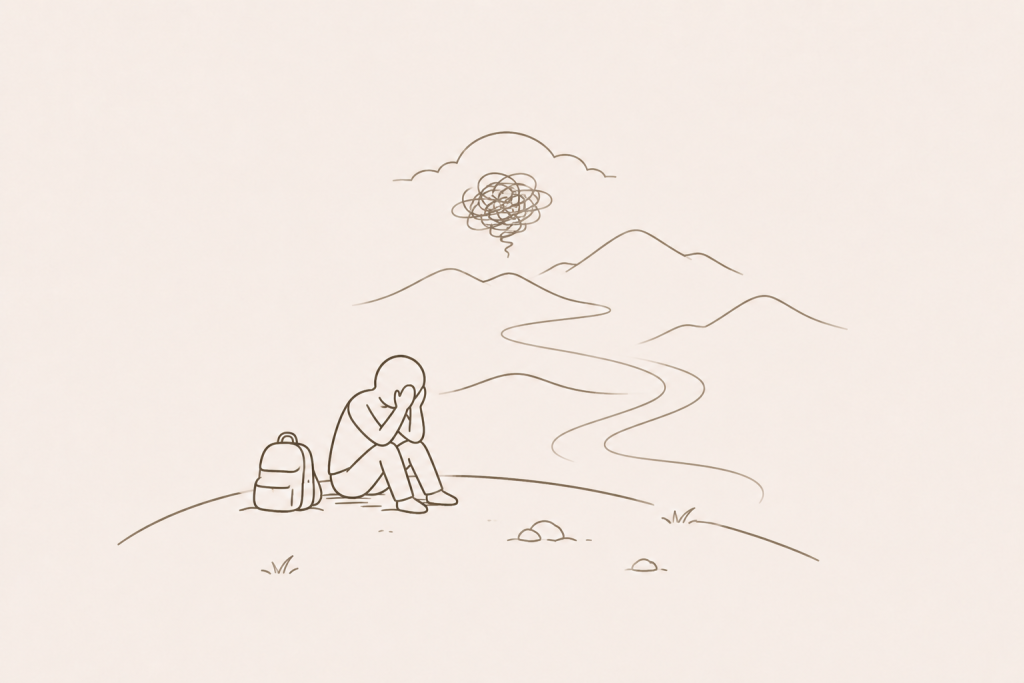
An Existential Analysis Perspective on Worth, Meaning & Healing
Updated May 2026 — with new reflections on meaning, comparison culture, and authentic self-worth
The Quiet Ache So Many People Carry
Have you ever achieved something — a promotion, a degree, a milestone — and still felt strangely… inadequate?
From the outside, life may look stable. You may have relationships, work, responsibilities. And yet inside there is a quiet voice asking:
“Why don’t I feel enough?”
“What is wrong with me?”
If this resonates, you are not alone. This experience cuts across age, culture, gender, and success level. Research shows struggles with self-worth are deeply human (Neff, 2011). And in 2026, in a world of constant comparison and performance metrics, that feeling is intensifying for many people.
But here is something important:
The feeling of “not enough” is rarely proof that you are inadequate.
It is often a signal that something meaningful inside you needs attention.
Let’s explore why.
Why Do I Feel Like I’m Not Enough?
Feeling like you are not enough is one of the most common struggles people experience, regardless of age, background, achievements, or circumstances. Many people carry an ongoing sense that they should be doing more, achieving more, giving more, or somehow being different than they are. Even after success, praise, or accomplishment, the feeling can remain.
According to existential psychologist and therapist Sandy ElChaar, the experience of “not enough” is often less about objective reality and more about our relationship with ourselves. It can reflect unmet needs for self-worth, acceptance, belonging, authenticity, or meaning. Rather than treating this feeling as proof of inadequacy, it can be helpful to explore what it may be revealing about how we see ourselves and what truly matters to us.
Why Does This Feeling Arise?
1. We Live in a Comparison Culture
Social media and performance-driven environments create what Brené Brown (2010) calls a culture of scarcity — the belief that we are never thin enough, productive enough, attractive enough, successful enough.
We compare our inner struggles to others’ highlight reels.
The result? Chronic self-doubt.
2. Conditional Worth Learned Early
Many people internalise the belief:
“I am loved when I achieve.”
“I am accepted when I behave.”
“I am valued when I perform.”
Carl Rogers (1961) described this as conditions of worth — when acceptance depends on meeting expectations.
Over time, this becomes a silent equation:
Achievement = Value
Failure = Shame
No wonder exhaustion follows.
3. Unmet Existential Needs
Existential Analysis (Längle, 2016) identifies four fundamental motivations that shape a fulfilled life:
- Do I have space, safety, and support to exist?
- Do I experience connection and belonging?
- Can I live authentically and experience my own value?
- Am I engaged in something meaningful?
When these are unmet — especially the third and fourth — a person can feel rootless, empty, or inadequate.
The feeling of “not enough” often emerges when:
- You are living out of obligation instead of authenticity.
- You are performing instead of relating.
- You are surviving instead of engaging meaningfully.
This is not low self-esteem alone.
It is an existential signal.
What If This Feeling Doesn’t Define You?
Feeling like you’re “not enough” often goes much deeper than confidence. It can affect your relationships, work, decisions, and sense of self-worth. Taking time to understand where these feelings come from is the first step towards lasting change.
“Why do I feel like I’m not enough?”
“How can I stop comparing myself to others?”
“How do I build genuine self-worth?”
Path Search is our free guided reflection app, built around the Meaningful Paths Mountain Framework, helping you explore difficult emotions through thoughtful, therapist-designed reflections.
🧭 Explore Your Question with Path SearchLooking to explore self-worth more deeply? Discover Mountain Maps
“Not Enough” Is Not a Flaw — It’s a Signal
Existential psychology does not rush to fix or suppress the feeling.
Instead, it asks:
- Am I living according to my values — or someone else’s expectations?
- Where am I compromising myself to belong?
- What feels meaningful — and where have I drifted from it?
Viktor Frankl (1963) proposed that human beings are fundamentally motivated by a will to meaning.
When meaning weakens, emptiness increases.
When authenticity is compromised, shame rises.
The question is not “What is wrong with me?”
It is:
“What in my life needs reconnection?”
The Science: Meaning and Self-Worth Protect Health
This isn’t just philosophical.
Research shows:
- People with a strong sense of purpose live longer and experience lower mortality risk (Alimujiang et al., 2019; Hill & Turiano, 2014).
- Self-compassion reduces anxiety and depression (Neff, 2011).
- Meaning in life protects against hopelessness (Steger, 2012).
Purpose is not luxury.
It is psychological nutrition.
A Gentle Pause Before You Keep Reading
If this article is resonating, you might find it helpful to explore these reflections inside the free Path Search app.
It allows you to type what you’re feeling — “not enough,” “lost,” “empty,” “comparison,” “burnout” — and it pulls up guided reflections grounded in the Mountain Framework.
It’s not therapy.
It’s a reflective tool to help you reconnect with meaning and direction.
You can explore Path Search here:
🧭 A free reflective search tool
Grounded in the Mountain Framework
Explore Free → Path Search – Meaningful Paths
Now let’s continue.
Rebuilding a Sense of Worth
Worth is not built through affirmations alone.
It is rebuilt through alignment.
Here are three practical ways:
1. Reconnect With Your Guiding Values
Ask yourself:
If no one were judging me — how would I want to live?
Choose 3 values that genuinely matter to you. Not impressive values — true ones.
Then ask:
Does my current life reflect these?
If not, what is one small shift I could make?
2. Take One Small Act of Meaning
Logotherapy emphasises action.
Meaning grows when lived.
- Help someone.
- Create something.
- Care for your body.
- Speak honestly.
You do not rebuild worth by thinking harder.
You rebuild it by acting in alignment.
3. Practice Self-Compassion
According to Neff (2011), self-compassion includes:
- Mindfulness — noticing your pain without exaggeration.
- Common humanity — remembering everyone struggles.
- Self-kindness — speaking gently to yourself.
Worth grows in kindness, not criticism.
How the Mountain Framework Helps
At Meaningful Paths, we structured Existential Analysis into a practical journey:
🧭 My Motivation — What is driving me?
🏔 My Journey — What have I carried? What storms shaped me?
📝 My Decisions — What meaningful step can I take now?
This is the foundation of the Path Search app.
If you’re unsure where to begin, you can type exactly what you’re feeling — “I feel not enough,” “I compare myself,” “I feel lost” — and receive structured reflections grounded in existential psychology.
Explore Path Search here:
🧭 A free reflective search tool
Grounded in the Mountain Framework
Explore Free → Path Search – Meaningful Paths
Sometimes the first step is simply clarifying what is happening inside.
When to Seek Additional Support
If feelings of worthlessness are persistent, severe, or linked to depression, anxiety, or suicidal thoughts, seek professional support.
UK options include:
- Samaritans: 116 123
- Mind
- Your local GP
Existential therapy, including Existential Analysis and Logotherapy, may also be helpful.
A Final Reflection
The ache of “not enough” does not mean you are broken.
It may mean:
- You have been living under pressure.
- You have been performing instead of relating.
- You have drifted from what feels meaningful.
And drift can be corrected.
Slowly.
Gently.
Intentionally.
You are not behind.
You are in process.
What If This Feeling Doesn’t Define You?
Feeling like you’re “not enough” often goes much deeper than confidence. It can affect your relationships, work, decisions, and sense of self-worth. Taking time to understand where these feelings come from is the first step towards lasting change.
“Why do I feel like I’m not enough?”
“How can I stop comparing myself to others?”
“How do I build genuine self-worth?”
Path Search is our free guided reflection app, built around the Meaningful Paths Mountain Framework, helping you explore difficult emotions through thoughtful, therapist-designed reflections.
🧭 Explore Your Question with Path SearchLooking to explore self-worth more deeply? Discover Mountain Maps
Frequently Asked Questions
Why do I feel like I’m not enough?
Many people develop feelings of not being enough through comparison, criticism, perfectionism, rejection, difficult life experiences, or unrealistic expectations. Often, the feeling reflects how we relate to ourselves rather than an accurate assessment of our worth.
Is it normal to feel like you’re not enough?
Yes. Feelings of inadequacy are a common human experience. At different stages of life, most people question their value, competence, attractiveness, success, or sense of belonging.
Why do I feel like I’m not enough even when I succeed?
Achievement does not always resolve deeper questions of self-worth. Many people discover that success provides temporary relief but does not address underlying beliefs about value, acceptance, or identity.
What does existential psychology say about self-worth?
Existential psychology suggests that self-worth is closely connected to authenticity, self-acceptance, relationships, values, and meaning. Rather than measuring worth through performance or achievement alone, it encourages people to recognise their inherent value as human beings.
Can perfectionism make me feel like I’m not enough?
Yes. Perfectionism often creates impossible standards that can leave people feeling inadequate regardless of how much they accomplish. The focus shifts from appreciating progress to constantly noticing perceived shortcomings.
Why do I compare myself to everyone else?
Comparison is a natural human tendency, but excessive comparison can undermine self-worth. When we focus primarily on other people’s achievements, appearance, relationships, or success, we may lose sight of our own strengths, values, and unique journey.
Can childhood experiences affect feelings of not being enough?
For many people, early experiences of criticism, rejection, neglect, unrealistic expectations, or conditional approval can contribute to later struggles with self-worth. These experiences often influence how people see themselves and relate to others.
How can I stop feeling like I’m not enough?
Developing self-compassion, recognising personal strengths, reconnecting with your values, challenging unrealistic expectations, and cultivating authentic relationships can all help strengthen self-worth over time. Change often happens gradually rather than overnight.
What is the difference between self-worth and self-esteem?
Self-esteem is often influenced by performance, success, achievement, or external feedback. Self-worth refers to the deeper recognition that you have value simply because you are human, regardless of success or failure.
Can purpose and meaning improve self-worth?
Many people find that connecting with meaningful goals, relationships, values, and contributions helps reduce feelings of inadequacy. Meaning provides a broader perspective that can shift attention away from constant self-evaluation and towards engagement with life itself.
References
Alimujiang, A., et al. (2019). Association Between Life Purpose and Mortality Among US Adults Older Than 50 Years. JAMA Network Open, 2(5).
Brown, B. (2010). The Gifts of Imperfection. Hazelden.
Frankl, V. (1963). Man’s Search for Meaning. Beacon Press.
Hill, P. L., & Turiano, N. A. (2014). Purpose in life as a predictor of mortality across adulthood. Psychological Science, 25(7), 1482–1486.
Längle, A. (2016). The Search for Meaning in Life and the Four Fundamental Motivations of Existential Analysis.
Neff, K. (2011). Self-Compassion: The Proven Power of Being Kind to Yourself. HarperCollins.
Rogers, C. (1961). On Becoming a Person. Houghton Mifflin.
Steger, M. F. (2012). Making meaning in life. Psychological Inquiry, 23(4), 381–385.