

Learning how to be alone and happy is not about avoiding relationships or pretending you don’t need others. It is about developing a steady relationship with yourself — one that does not collapse when external validation disappears.
Many people struggle with being alone because solitude exposes uncomfortable thoughts, doubts, or a fear of not being “enough.” But when approached intentionally, time alone can become one of the most powerful foundations for confidence, clarity, and inner peace.
If you often notice your mind racing when you are by yourself, you may also relate to our article on racing thoughts and inner restlessness.
Can You Be Alone and Truly Happy?
Many people search questions such as:
- How can I be happy alone?
- How do I enjoy my own company?
- Why do I feel lonely when I’m by myself?
- Is it healthy to spend time alone?
While modern culture often treats being alone as something to avoid, psychology and existential philosophy suggest that solitude can become a source of growth, self-discovery, and meaning.
According to existential psychologist and therapist Sandy ElChaar, the goal is not simply to tolerate being alone but to develop a meaningful relationship with yourself.
Being alone and being lonely are not the same thing. Loneliness is the painful experience of disconnection, while solitude can become a space for reflection, creativity, emotional recovery, and personal growth.
From an existential perspective, learning to be alone often helps us reconnect with our values, understand ourselves more deeply, and build a stronger foundation for meaningful relationships with others.
The question is not simply whether you are alone. The deeper question is whether you feel connected—to yourself, your values, your relationships, and your sense of purpose.
Alone vs Lonely: Understanding the Difference
Being alone is a physical state.
Loneliness is an emotional state.
You can be surrounded by people and still feel deeply lonely. You can also sit quietly by yourself and feel grounded, content, and connected.
Happiness in solitude begins when you stop treating being alone as a problem to solve and start seeing it as space to grow.
If loneliness feels more like your experience, you may find helpful insights in:
Loneliness in the UK 2025
https://www.meaningfulpaths.com/loneliness-in-the-uk-2025-listening-to-the-nations-search-for-connection/
Being Alone Through the Four Fundamental Motivations
Many articles about solitude focus on practical tips such as keeping busy, developing hobbies, or building confidence. While these suggestions can be helpful, Existential Analysis invites us to explore a deeper question:
What makes being alone feel peaceful for some people and painful for others?
One way to understand this is through the Four Fundamental Motivations developed by Professor Alfried Längle. These motivations describe four essential conditions that support a fulfilling human life. When they are supported, solitude can feel nourishing and meaningful. When they are blocked, being alone may feel overwhelming or lonely.
FM1 – Security: Do I Feel Safe With Myself?
The first fundamental motivation asks:
Can I be here?
At its core, this motivation relates to safety, stability, and support.
For some people, being alone feels uncomfortable because it creates a sense of vulnerability. Without distractions, social contact, or activity, feelings of uncertainty may emerge.
Questions beneath the experience may include:
- Am I safe on my own?
- Can I cope with difficult emotions?
- What happens if nobody is there to support me?
Learning to be alone often begins with creating a sense of inner security. This may involve establishing routines, caring for your physical wellbeing, creating comfortable spaces, and reminding yourself that solitude does not mean abandonment.
FM2 – Value: Can I Enjoy Being With Myself?
The second fundamental motivation asks:
Do I like living?
This motivation relates to connection, enjoyment, emotional fulfilment, and experiencing value in life.
Many people struggle with solitude because they have never learned how to enjoy their own company. When external stimulation disappears, they may feel empty, restless, or disconnected.
Being alone becomes easier when you can genuinely engage with things that bring value into your life:
- Reading
- Walking in nature
- Creativity
- Reflection
- Music
- Learning
- Spiritual practice
- Meaningful hobbies
The goal is not simply to fill time. It is to discover experiences that allow you to feel connected and alive.
FM3 – Authenticity: Can I Be Myself?
The third fundamental motivation asks:
Am I allowed to be myself?
Many people spend years adapting to expectations, pleasing others, or defining themselves through relationships.
When they are alone, an uncomfortable question can emerge:
Who am I when nobody else is around?
Solitude can provide an opportunity to reconnect with your authentic self.
Without social pressures, you may begin to notice:
- What genuinely matters to you
- What you truly enjoy
- What values guide your life
- What needs have been ignored
Learning to enjoy your own company often means developing a kinder, more accepting relationship with yourself.
FM4 – Meaning: What Is My Life Moving Toward?
The fourth fundamental motivation asks:
What am I living for?
People often experience loneliness most intensely when they feel disconnected from purpose and direction.
Even surrounded by people, life can feel empty if it lacks meaning.
Conversely, solitude often becomes more peaceful when it is connected to something larger:
- Personal growth
- Creativity
- Relationships
- Contribution
- Spiritual development
- Service
- A meaningful goal
Purpose does not eliminate loneliness entirely, but it can transform solitude from something that feels empty into something that feels intentional.
The Difference Between Loneliness and Solitude
From the perspective of the Four Fundamental Motivations, loneliness is not simply the absence of people.
It may reflect:
- A lack of security (FM1)
- A lack of emotional fulfilment (FM2)
- Disconnection from yourself (FM3)
- A lack of meaning or direction (FM4)
The journey toward being alone and happy is therefore not about isolating yourself. It is about strengthening these foundations so that your relationship with yourself becomes a source of support rather than struggle.
When this happens, solitude can become a place where clarity, growth, and meaning emerge.
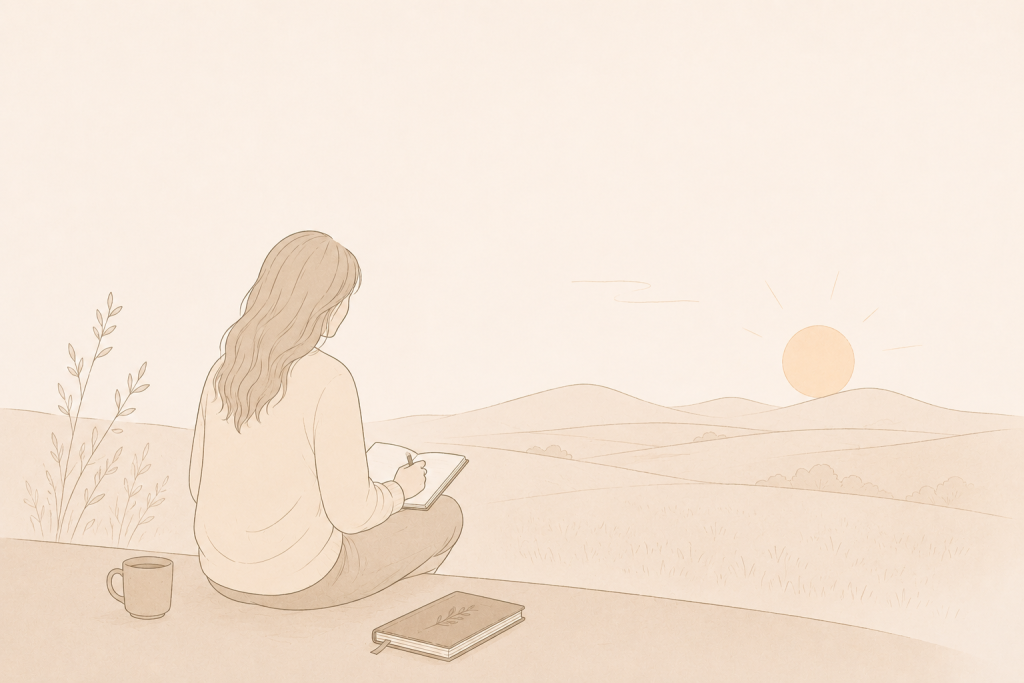
Further Steps To Be Alone And Happy
1. Strengthen Your Relationship With Yourself
Happiness alone begins with self-acceptance.
When your sense of worth depends on constant interaction, silence can feel threatening. But if you begin to appreciate your own thoughts, values, and rhythms, solitude becomes restorative rather than draining.
You may also find encouragement in:
Self Worth Quotes: When You Forget Your Value
https://www.meaningfulpaths.com/self-worth-quotes-when-you-forget-your-value/
Ask yourself:
• What do I actually enjoy doing alone?
• When do I feel most authentic?
• What gives my time meaning?
2. Build Meaning, Not Just Distraction
Scrolling, binge-watching, or constant noise may prevent loneliness temporarily — but they rarely create fulfilment.
Instead, focus on activities that align with your values:
• learning
• creativity
• movement
• reflection
• skill development
Happiness grows when your actions reflect who you want to become.
For deeper reflection on meaning and direction, you may also explore:
Living a Purposeful Life
https://www.meaningfulpaths.com/living-a-purposeful-life/
3. Develop Emotional Self-Reliance
Being alone becomes peaceful when you trust yourself emotionally.
This means:
• soothing yourself when anxious
• making decisions without constant reassurance
• tolerating uncertainty
Emotional resilience turns solitude into strength.
If overthinking makes being alone harder, you may resonate with:
Overthinking Quotes: When Your Mind Won’t Let Go
https://www.meaningfulpaths.com/overthinking-quotes/
4. Create Direction in Your Life
Often, unhappiness when alone is not about isolation — it’s about lack of direction.
When you have:
• goals
• purpose
• meaningful direction
Time alone becomes productive rather than empty.
You are not “waiting” for life to begin. You are building it.
5. Reframe Solitude as Growth
Some of the most transformative periods of life happen in solitude.
Alone time allows:
• deeper reflection
• value clarification
• healing
• creative insight
Instead of asking, “Why am I alone?”
Ask, “What is this season teaching me?”
When Being Alone Feels Overwhelming
If being alone brings racing thoughts, sadness, or anxiety, it may signal unresolved emotional patterns rather than a dislike of solitude itself.
In those moments, gentle reflection tools can help you understand what is actually surfacing.
Our reflective framework, Path Search, offers structured prompts to help you explore your thoughts and emotions without judgement.
🧭 Explore Loneliness, Connection, and Purpose With Path Search
If you’re struggling with questions like:
- Why do I feel lonely?
- How do I enjoy my own company?
- Why do I feel disconnected from people?
- How do I find purpose?
- What is missing in my life?
- How do I build confidence?
🧭 Path Search is our free reflective tool designed to help you explore questions about loneliness, purpose, relationships, self-worth, meaning, emotional wellbeing, and personal growth.
Simply type your question in your own words and discover personalised reflections, articles, exercises, and resources grounded in Existential Analysis and Logotherapy.
Sometimes the path to feeling connected begins not with finding more people—but with building a stronger relationship with yourself.
🧭 Try Path Search for Free → Path Search – Meaningful Paths
Go Deeper: Quest for Meaning
If you want to move beyond surface-level advice and truly understand how to feel steady, purposeful, and content in your own company, you may find support in:
Quest for Meaning: 10 Exercises on Purpose
https://www.meaningfulpaths.com/quest-for-meaning-ebook-2/
This book offers a powerful combination of transformative exercises, expert insight, and practical guidance grounded in Existential Analysis. Through 10 carefully crafted exercises, you will explore your values, life direction, inner conflicts, and deeper motivations — helping you build a life that feels meaningful, not just busy.
Rather than simply learning how to tolerate being alone, you begin to understand how to relate to yourself with clarity, acceptance, and confidence.
Create Your Own Personal Growth Plan
If you are looking for a simple way to turn reflection into action, you may find our personal growth plan template helpful. This step-by-step guide includes a sample personal growth plan and a clear personal growth plan template you can use to organise your goals, reflect on what matters most, and take practical steps toward meaningful change. Whether you are exploring personal development, life direction, or new habits, using a structured personal growth plan template can help bring clarity and focus to your journey.
Final Reflection
Being alone and being happy are not opposites.
They become connected when you learn to relate to yourself with curiosity rather than criticism.
Solitude is not emptiness.
It is space.
And in that space, you can begin to build a life that feels genuinely yours.
Image reference – https://www.pexels.com/@mellamed-442447
Frequently Asked Questions
Can you be alone and happy?
Yes. Many people learn to enjoy solitude when they develop self-connection, meaningful activities, emotional awareness, and a sense of purpose.
Why do I feel lonely when I’m alone?
Loneliness often reflects a feeling of disconnection rather than simply being physically alone. It may relate to relationships, self-worth, unmet emotional needs, or a lack of meaning.
Is it healthy to spend time alone?
Yes. Healthy solitude can support reflection, creativity, emotional regulation, personal growth, and self-awareness.
What is the difference between loneliness and solitude?
Loneliness is the painful feeling of disconnection. Solitude is the experience of being alone, which can be either nourishing or uncomfortable depending on the circumstances.
How can I enjoy my own company?
Focus on activities you genuinely value, develop self-awareness, practise self-compassion, and spend time exploring what feels meaningful to you.
Does being alone improve confidence?
It can. Spending time alone often strengthens self-trust, independence, and confidence in your ability to navigate life without constant external validation.
Why am I afraid of being alone?
Fear of being alone may stem from insecurity, past experiences, low self-worth, anxiety, or discomfort with difficult emotions.
Can being alone help me find purpose?
Many people discover greater clarity, values awareness, and purpose during periods of intentional solitude and reflection.