Anxious avoidant attachment is a term people often use to describe a confusing inner pattern: wanting closeness and connection, while simultaneously feeling overwhelmed, unsafe, or compelled to withdraw when intimacy appears. Many people who search for anxious avoidant attachment recognise a push–pull experience in their relationships, emotions, and inner world.
This page offers a clear, grounded explanation of anxious avoidant attachment, combining psychological research with a meaning-based and existential perspective. Rather than labelling or pathologising, it aims to support understanding of why this pattern may exist and how it can be approached with awareness, responsibility, and care.
What Is Anxious Avoidant Attachment?
Anxious avoidant attachment is not a formal diagnostic category. It is a commonly used term that reflects mixed attachment responses, where anxious and avoidant tendencies coexist.
People who resonate with anxious avoidant attachment may experience:
A strong desire for emotional closeness and reassurance
Anxiety when connection feels uncertain
Emotional shutdown or withdrawal when intimacy increases
Cycles of pursuing connection and then pulling away
This pattern often leads to questions such as:
Why do I crave closeness but push people away?
Why do relationships trigger anxiety and withdrawal?
Why do I overthink and then shut down?
These responses are not random. They often reflect learned ways of navigating safety, closeness, and emotional risk.
Attachment Theory: Psychological Foundations
Attachment theory was founded by John Bowlby, who proposed that early relationships shape how humans relate to safety, closeness, and emotional security throughout life.
Mary Ainsworth expanded this work through observational research, identifying patterns of attachment that continue to inform adult relational understanding.
Contemporary research recognises that adults do not always fit neatly into one attachment category. Instead, many people show overlapping or fluctuating strategies, which is why anxious avoidant attachment resonates with lived experience.
How Anxious Avoidant Attachment Shows Up in Relationships
Anxious avoidant attachment often becomes most visible in close relationships, where emotional stakes are high.
Common experiences include:
Overthinking communication and perceived changes in closeness
Feeling intense longing when distance appears
Feeling overwhelmed or emotionally flooded when intimacy deepens
Withdrawing, shutting down, or becoming distant after closeness
Difficulty trusting both connection and independence
These cycles can be confusing for both individuals and their partners. Importantly, this pattern reflects protection, not failure.
Anxiety, Avoidance, and Overthinking
Anxious avoidant attachment is closely linked with anxiety and overthinking. When closeness feels both desired and threatening, the mind often becomes highly active, scanning for danger, rejection, or reassurance.
Overthinking attempts to regain certainty. Avoidance attempts to reduce emotional intensity. Both are protective responses shaped by experience.
A Meaning-Based and Existential Perspective
At Meaningful Paths, anxious avoidant attachment is understood not only as a relational pattern, but as an existential response to life, responsibility, and vulnerability.
Rather than asking “What is wrong with me?”, a meaning-based approach invites questions such as:
What does closeness represent for me?
What feels at stake when I am emotionally seen?
What am I protecting when I withdraw?
From this perspective, attachment patterns are meaningful responses, not fixed identities.
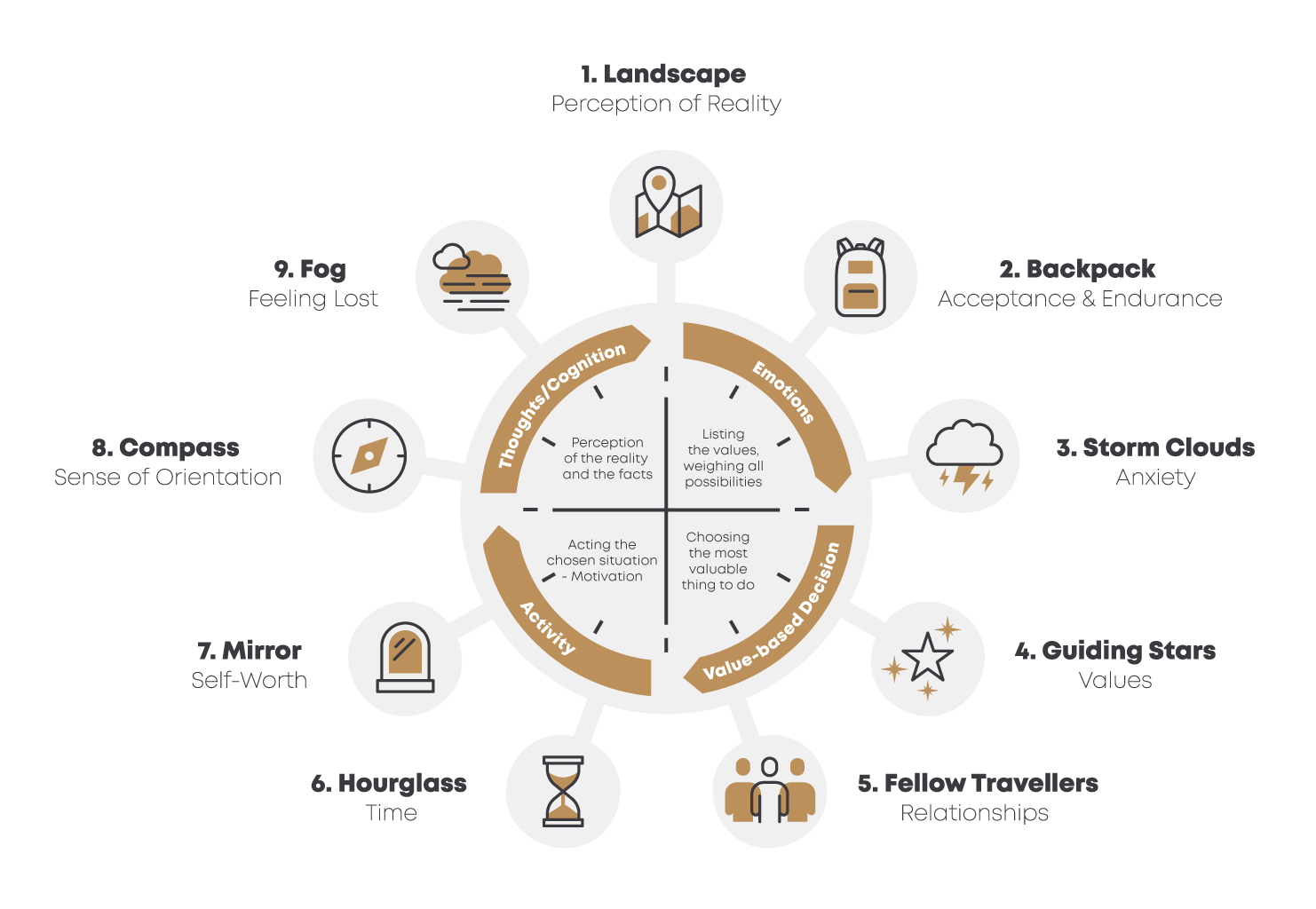
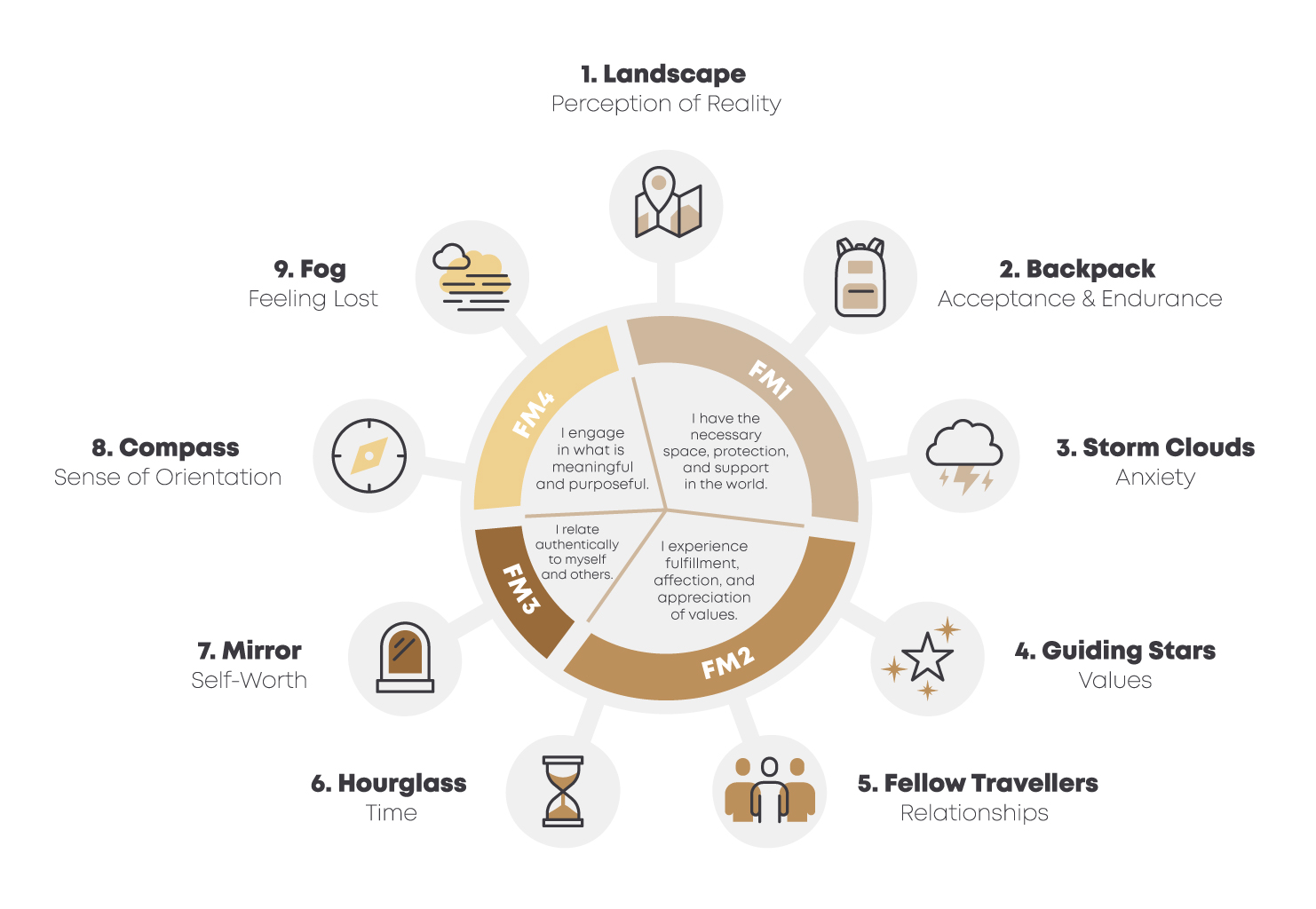
The Meaningful Paths Mountain Framework
The Meaningful Paths Mountain Framework supports understanding anxious avoidant attachment through three interconnected dimensions:
My Motivation
What pulls me toward connection, and what pulls me toward safety?
My Journey
How did this pattern develop in response to my life experiences?
My Decisions
How do I choose to respond now, with awareness and responsibility?
This framework supports reflection rather than self-fixing, allowing patterns to be understood and lived with more choice.
Reflection Rather Than Fixing
Many people searching for anxious avoidant attachment want solutions. Meaningful change often begins with reflection instead.
Helpful questions include:
What feels unsafe about intimacy for me?
What does withdrawal protect?
What kind of relationships feel meaningful rather than merely reassuring?
Support Through Path Guide
Understanding is sometimes only the beginning. Reflection can raise new emotions and decisions.
Path Guide offers a structured, guided way to explore anxious avoidant attachment and related experiences.
Path Guide includes:
A 12-week guided journey
One reflective activity per week delivered to the Meaningful Paths mobile app
Activities grounded in the Meaningful Paths Mountain Framework
Personal review of your Path Guide entry form by Founder David
Topics include:
Relationships
Mental health
Anxiety
Stress and burnout
Meaning
Purpose and goals
Path Guide supports reflection and growth rather than diagnosis or treatment.
Explore Meaningful Paths at:
https://www.meaningfulpaths.com/
Our Tools
Path Search
For Individuals: React Native app. Non AI human centered search engine for life's challenges. Topics include stress, anxiety, relationships, work and much more.
Path Guide
For Individuals: Mobile based app; a dedicated coach will send you in app activities based on your needs - stress, anxiety, communication.

Client Pathways
For Therapists & Practitioners: Send clients interactive activities and homework in between your sessions.

Community Insights
For Therapists & Practitioners: Real world Data Insights to help you serve your communities mental health and wellbeing needs.
Further Reading, Research, and Resources
Formal References (APA Style)
Bowlby, J. (1969). Attachment and loss: Vol. 1. Attachment. London, UK: Hogarth Press.
Ainsworth, M. D. S., Blehar, M. C., Waters, E., & Wall, S. (1978). Patterns of attachment: A psychological study of the strange situation. Hillsdale, NJ: Erlbaum.
Mikulincer, M., & Shaver, P. R. (2007). Attachment in adulthood: Structure, dynamics, and change. New York, NY: Guilford Press.
Siegel, D. J. (2010). The mindful therapist: A clinician’s guide to mindsight and neural integration. New York, NY: W. W. Norton & Company.
Frankl, V. E. (1959). Man’s search for meaning. Boston, MA: Beacon Press.
Trusted External Resources
Attachment Project
https://www.attachmentproject.comBritish Psychological Society
https://www.bps.org.ukNHS – Mental Health & Relationships
https://www.nhs.uk/mental-healthExistential Analysis & Logotherapy
https://existentialanalysis.org
Anxious Avoidant Attachment: Frequently Asked Questions
What is anxious avoidant attachment?
Anxious avoidant attachment describes mixed attachment responses where closeness is desired but also experienced as emotionally unsafe or overwhelming.
Is anxious avoidant attachment recognised in psychology?
Attachment theory identifies anxious and avoidant patterns separately, but modern research recognises overlapping strategies in adulthood.
Can anxious avoidant attachment change?
Research suggests attachment patterns are dynamic. Change often begins with awareness, reflection, and conscious response rather than force.
How does an existential perspective help?
Existential approaches, including logotherapy developed by Viktor Frankl, focus on meaning, responsibility, and how individuals relate to their inner experience.
What kind of support can help?
Some people benefit from therapy. Others benefit from guided reflection, coaching, or structured personal growth.
Final Note
This page is intended for education and reflection. It does not replace professional mental health care. If distress feels overwhelming, professional support may be appropriate.
More Support With Our Blogs
If you’re exploring anxious avoidant attachment, you may also find these related articles helpful for understanding emotional experience, overthinking, connection, and anxiety from different angles:
Understanding Language & Emotional Distress
Mental Health, Mental Illness and the Language of Distress in the UK
https://www.meaningfulpaths.com/mental-health-mental-illness-and-the-language-of-distress-in-the-uk/
This article explores how we talk about mental health and emotional distress, including how language shapes our inner experience and how understanding that language can support reflection and wellbeing.
Overthinking in Relationships
Why Do I Overthink So Much in My Relationship? A Path to Understanding and Clarity
https://www.meaningfulpaths.com/why-do-i-overthink-so-much-in-my-relationship-a-path-to-understanding-and-clarity/
For many people with anxious avoidant patterns, overthinking in close relationships can feel familiar. This article offers insight into the cycle of thought and how emotional reflection promotes clarity over automatic rumination.
Loneliness & Social Searching
Loneliness in the UK 2025: Listening to the Nation’s Search for Connection
https://www.meaningfulpaths.com/loneliness-in-the-uk-2025-listening-to-the-nations-search-for-connection/
Loneliness and connection overlap with attachment experience for many. This piece examines how loneliness shows up in collective search behaviour and what it reveals about the human need for connection.
Anxiety Without Clear Cause
Why Am I Anxious for No Reason?
https://www.meaningfulpaths.com/why-am-i-anxious-for-no-reason/
Anxiety is a common companion to mixed attachment tendencies and relational uncertainty. This article explores why anxiety can feel unexplained and how emotional awareness helps us understand its meaning.
Each of these articles supports understanding of the emotional, relational, and reflective experiences that often intersect with anxious avoidant attachment. Together, they form a network of resources to help you explore meaning, values, connection, and purposeful living at a deeper level.