

Relationships grow when both partners are intentional about how they communicate, support one another, and navigate life together. Setting relationship goals can help couples build stronger emotional connection, develop mutual understanding, and create a shared vision for their future.
Rather than focusing only on milestones such as moving in together or getting married, meaningful goals in relationships often centre around emotional connection, communication, and personal growth. When couples consciously reflect on what they want to build together, their relationship becomes something they actively nurture rather than something that simply unfolds.
In this guide, we explore healthy relationship goals, practical relationship goals examples, and ways couples can reflect together on what truly matters in their partnership.
What Are Relationship Goals?
Relationship goals are intentions or shared values that guide how a couple wants their relationship to grow and function over time. These goals can include communication habits, emotional support, shared experiences, and ways of resolving conflict.
Healthy goals in relationships are not about perfection. Instead, they provide direction and help couples move toward deeper connection and understanding.
Some goals focus on daily habits, while others may reflect longer-term aspirations such as building trust, supporting each other’s ambitions, or creating a meaningful life together.
Why Goals in Relationships Matter
Many couples move through relationships reacting to circumstances rather than consciously shaping them. Setting intentional goals in relationships encourages partners to step back and reflect on what kind of relationship they want to create together.
When couples share clear relationship goals, they often experience:
• stronger emotional connection
• clearer communication
• greater mutual support
• improved conflict resolution
• deeper sense of partnership
Reflecting on relationship goals also helps couples stay aligned as life evolves and circumstances change.
Healthy Relationship Goals for Couples
Healthy relationship goals for couples often focus on strengthening the emotional foundations of a partnership.
Some of the most meaningful goals include:
1. Communicating openly and honestly
Healthy communication is one of the most important relationship goals. Couples who openly share thoughts, concerns, and feelings build deeper trust and understanding.
2. Supporting each other’s personal growth
Strong relationships allow both partners to grow as individuals. Supporting each other’s aspirations can be an important part of shared goals in relationships.
3. Practicing empathy and understanding
Being able to see situations from your partner’s perspective can reduce conflict and deepen emotional intimacy.
4. Maintaining emotional connection
Regularly checking in with one another emotionally helps couples stay connected even during busy or stressful periods.
5. Creating shared experiences
Spending meaningful time together strengthens bonds and reinforces shared memories.
Relationship Goals Examples
Looking at practical relationship goals examples can help couples understand how these ideas translate into everyday life.
Some common relationship goals examples include:
• setting aside weekly time to talk without distractions
• expressing appreciation regularly
• resolving disagreements respectfully
• supporting each other’s ambitions
• prioritising quality time together
These relationship goals examples show that small daily habits often shape the strength of a relationship more than large gestures.
Another useful way to think about relationship goals examples is to focus on how partners want to treat each other during both easy and difficult moments.
Emotional Goals in Relationships
Beyond practical habits, many relationship goals relate to emotional connection and psychological safety.
Important emotional goals may include:
• feeling safe to express emotions openly
• knowing your partner listens and understands
• feeling valued and respected
• maintaining affection and emotional warmth
When emotional goals in relationships are nurtured, couples often experience greater satisfaction and resilience.
Communication Goals in Relationships
Communication challenges are one of the most common sources of tension between partners.
Setting communication-focused relationship goals can include:
• practicing active listening
• expressing feelings without blame
• discussing difficult topics calmly
• clarifying misunderstandings early
Improving communication often transforms how couples experience everyday interactions.
Long-Term Relationship Goals
While daily habits are important, some relationship goals focus on the long-term direction of the partnership.
Examples of long-term goals in relationships might include:
• building a shared vision for the future
• supporting each other’s career paths
• developing shared values around family and lifestyle
• growing emotionally together over time
These goals help couples maintain alignment as life evolves.
Interactive Relationship Goals Worksheet
If you would like to explore your relationship goals more deeply, we have created an interactive relationship goals worksheet to guide your reflection.
This worksheet helps couples:
• clarify their most important relationship goals
• reflect on shared values and expectations
• identify areas where communication could improve
• explore meaningful ways to grow together
You can work through the relationship goals worksheet individually or as a couple, using the questions to spark thoughtful conversation about your partnership.
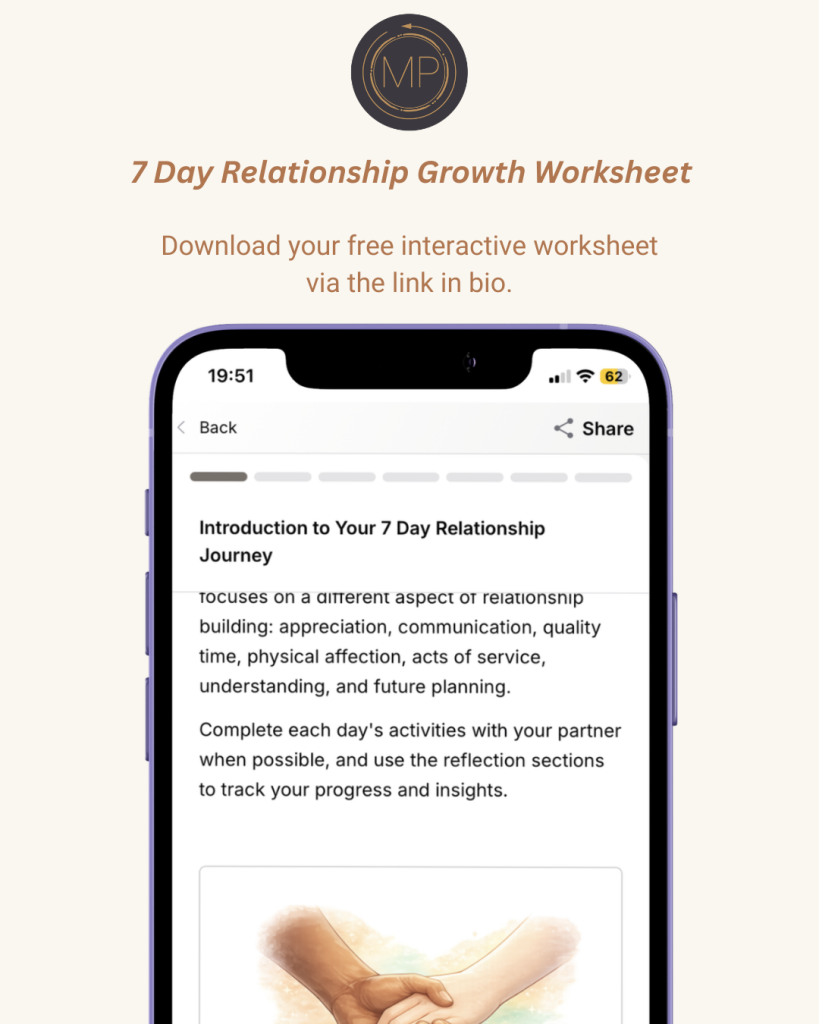
Explore the 7 Day Relationship Growth Worksheet via our free mobile app >>
Many couples find that structured reflection helps bring clarity to the goals in relationships that matter most to them.
How to Set Relationship Goals Together
Setting meaningful relationship goals works best when both partners participate in the conversation.
Consider exploring questions such as:
• What kind of relationship do we want to build together?
• What makes us feel most connected?
• What challenges do we want to improve together?
• How can we support each other’s growth?
Reflecting on these questions helps couples develop shared goals in relationships that reflect their values and aspirations.
Reflecting on Relationship Growth
Relationships evolve over time, and so do the relationship goals that guide them.
Taking time to reflect regularly on what is working well—and what may need attention—can help couples maintain connection and understanding.
When partners approach their relationship with curiosity and openness, even challenges can become opportunities for growth.
Continue Exploring Relationships and Emotional Connection
If you are exploring questions about connection, communication, and emotional closeness, you may also find these articles helpful:
• Why Do I Feel Lonely in My Relationship
• Relationship Journal: 50 Relationship Journaling Prompts to Deepen Connection
• Why Do I Overthink So Much in My Relationship
Each explores different aspects of emotional connection and offers reflection to help you better understand your relationship experiences.
Explore the 7 Day Relationship Growth Worksheet via our free mobile app >>
Relationship Goals FAQ
What are good relationship goals for couples?
Good relationship goals for couples focus on communication, trust, emotional support, and shared growth. Healthy relationship goals often include listening to each other openly, resolving conflict respectfully, spending meaningful time together, and supporting each other’s personal development. These goals help strengthen emotional connection and long-term relationship satisfaction.
What are examples of relationship goals?
Some common relationship goals examples include communicating honestly, expressing appreciation regularly, resolving disagreements calmly, prioritising quality time together, and supporting each other’s ambitions. These relationship goals examples focus on daily habits that help couples maintain trust and emotional closeness.
Why are goals in relationships important?
Setting goals in relationships helps couples build intentional partnerships rather than drifting through challenges without direction. When couples share relationship goals, they can align expectations, improve communication, and create a stronger emotional foundation over time.
How do couples set relationship goals?
Couples can set relationship goals by reflecting together on what they value most in their relationship. This might include discussing communication habits, emotional needs, shared priorities, and future aspirations. Many couples find that using guided questions or a relationship goals worksheet helps start these conversations.
Featured image – https://pixabay.com/users/stux