
Sarmad Domit
Artist, Writer and Thinker
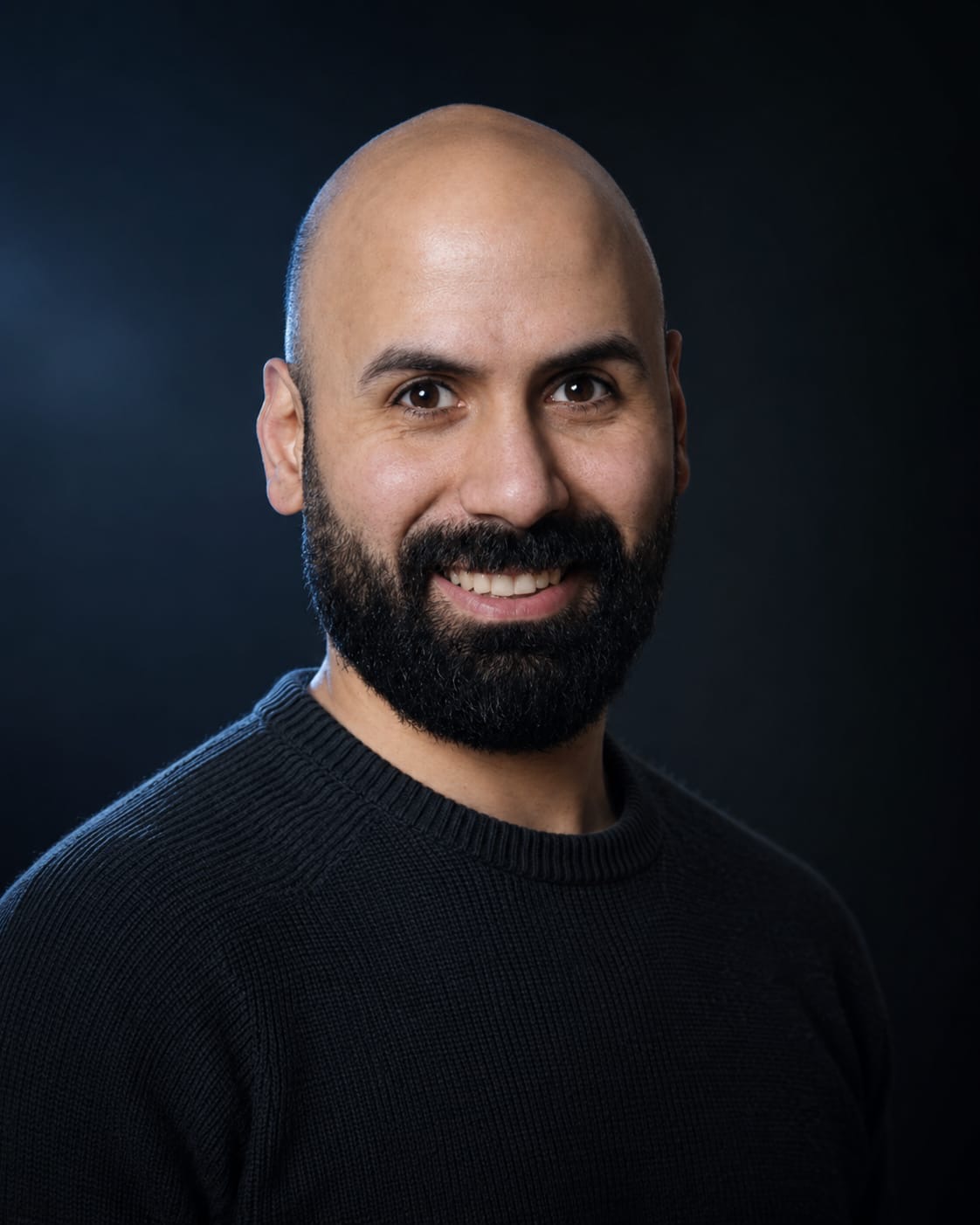
Sarmad Domit is a Syrian-born Belgian artist with a background in technology and a deep curiosity about science, psychology, philosophy, and faith.
Having lived across different countries and cultures, his experiences have shaped the way he sees people, relationships, and life itself. A thinker who sometimes thinks too much, he has spent years questioning his beliefs, challenging his own understanding, and searching for meaning. Through his writing, he shares personal reflections on love, doubt, faith, and the complicated journey of understanding ourselves.
This walk started a long time ago. I don’t even remember why I started it. What I remember is a seed, an annoying one, growing quietly inside me.
It showed itself through random emotions, oversensitivity, anxiety (a bad one), loneliness, toxic attachment, and a victim mentality. And, of course, all the things that kept them alive, especially overthinking.
Alongside all of that, I had a deep longing for love. Let me call it fictional love rather than ideal love, because in my head it represented perfect love. Back then, meanwhile the love inside me I couldn’t understand why this love felt bigger than me, or why something as beautiful as love could bring so much anxiety.
At the same time, I was going through a revolution against the society and people around me. I felt I didn’t belong.
With this war in my head, four months before turning 22, I made the first major decision of my life: I left my country.
As usual back then, I hadn’t thought it through enough. I wanted to escape, or at least that was what I believed I was doing. I thought leaving would solve my problems.
Instead, without going into the details, that decision took away the only stable thing in my life: my family.
I found myself abroad, with no home, no resources, and the same war in my head. Strangely, I felt less pressure at first, even as I was walking towards a long existential crisis I didn’t know about.
And when I say existential crisis, I mean it, especially looking back now.
Who am I?
Where do I belong?
What do I actually believe in?
And is my faith true?
The one thing I expected to have my back, God, was suddenly being challenged too. People questioned my faith, and those questions became my own. I remember thinking: Wait, are these really my beliefs, or just the beliefs of my parents and the society I grew up in?
It felt as if I had lost my faith at the same time as everything else.
A new country, a new life, unfamiliar people, racism, no support system, and no solid faith.
Yet I managed to hold on to one familiar thing: a church ”the building, the people attached to it and the faith we shared”. It was the only place that reminded me of home, the only place where I still felt connected to something I knew.
That building, those people, and that sense of belonging became my lifeline.
It took me four years to reach my first major turning point in faith. And it changed my mental health in a way I could truly feel. I found a deep peace, a peace I believed nobody could take from me.
For a while, it felt unshakable. I moved through life with faith, flexibility, and a positive attitude. I felt as if nothing could stop me.
Then came my second life-changing decision: moving abroad again.
Another country, another language, another culture, and once again, I knew nobody. But there was one big difference. This time, I believed I was bringing solid faith with me.
At least, that’s what I thought.
It took longer this time, but eventually what I believed was solid fell apart, and this time much more aggressively.
By then, I had a stable life and stable resources. And maybe that’s when the deeper questions begin: when you finally have enough stability to stop surviving and start looking at what’s happening inside you.
I was facing my first real emotional breakdown. I call it my first because before that, I don’t think I was mature enough to understand or process my feelings.
This time, it wasn’t only a crisis of faith. It was an emotional crisis that pulled my faith into it.
I began to understand how fragile stability can be, and how serious, even dangerous, our mental and emotional struggles can become.
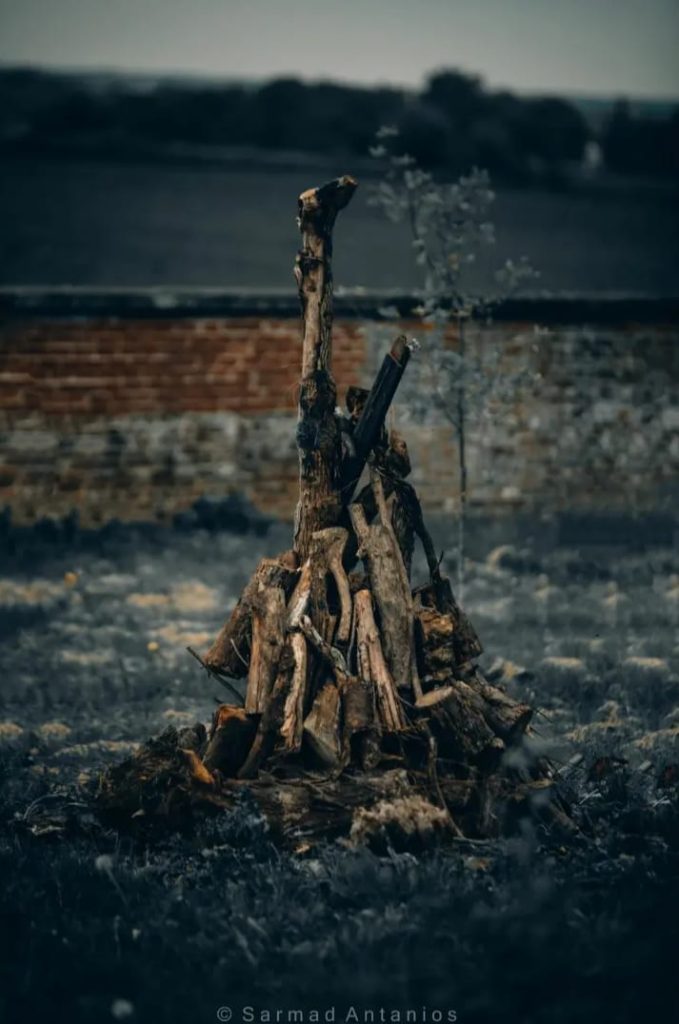
I spent a long time researching, reading, and trying to understand my heart. What was this thing inside me that I seemed to have no control over, yet it was controlling my days? Why was my anxiety reaching such extreme levels?
And this time, my lifeline wasn’t a building or a group of people.
It was a relationship with what I can only describe as, at that moment, a fictional creature: God.
Why do I call Him fictional?
Because I was going through hell trying to speak to Him and ask for help, and I heard nothing back.
Just silence.
I was burning out, desperate for help, waiting for an answer that never seemed to come.
But today, I belive that silence was my lifeline.
It gave me time and space to search, to understand myself, and to find my own way out. Instead of being handed a fish, I learned how to fish.
And that changed my relationship with God.
I stopped looking only for the God whose image had been passed down to me.
Through critical thinking, research, reading, freedom of choice, and the painful work of understanding my weaknesses and childhood traumas, I began searching for Him for myself.
Not the version I had inherited. The one I could come to know.
I found Him in the people around me. I found Him in psychology. I even found Him in astrophysics “My cosmic obsession”.
And slowly, I started to understand peace differently.
Today, I’m writing from the middle of another big storm in my life. I have no real emotional or material stability. I’ve lost my job for the second time in a row, after moving countries for work. I’m in a long-distance relationship, trying to figure out the next step in my life.
And yet, I feel a deep peace, as if nobody can take it from me but this time feels deferent. Or. Well who knows !
Not because everything is fine. It isn’t.
But because I can somehow zoom out from my life and see my feelings without letting them become my entire reality. I can feel the storm without believing that the storm is all there is.
From that place, life looks different.
We are here on Earth for a tiny fraction of a second compared with the age of the universe. Our time is so short, and yet we can spend so much of it chasing things as if they will last forever.
I’m not saying we shouldn’t have material things. I’m saying we should be careful about what we give our hearts to.
“For where your treasure is, there your heart will be also.”
Matthew 6:21
And for me, what lasts is love.
God is love, and I believe we are here to bring that love into each other’s lives.
To be the presence of God for someone else.
By helping each other. By accepting our differences. By loving even our enemies, even if loving them sometimes means doing so from a distance. Sometimes helping another person can be as simple as a smile.
As Mother Teresa said:
“Never worry about numbers. Help one person at a time and always start with the person nearest you.”
“If you can’t feed a hundred people, feed just one.”
My experience taught me something precious: to put God as a filter in my life.
By that, I mean trying to love my partner or any one I meet the way Jesus loves, to look at her the way He looks at us, and to approach what I do through Him.
It doesn’t mean I won’t suffer, or that losing things won’t hurt. It means remembering that we’re here for a short time, that we don’t truly own anything, and that sometimes letting go is a form of love and might be the answer .
Everything around us can change. God is the only lasting stability I’ve found.
Now, if you’re reading this and you don’t believe in God, you might think that my relationship with Him was just a trick of the mind, a way of shifting my focus to survive difficult times.
I understand why you might think that.
But this didn’t come from avoiding questions. It came through years of questioning, doubting, researching, choosing freely, and trying to heal what was wounded inside me.
I’m not claiming that every question has disappeared. I’m saying that through that journey, I found Him in a way that became my own.
And now, even with everything going on, I can feel Him.
To person who’s reading now I wish you all the luck and the peace in your journey and life
Sarmad Domit
Artist, Writer and Thinker
Sarmad Domit is a Syrian-born Belgian artist with a background in technology and a deep curiosity about science, psychology, philosophy, and faith.
Having lived across different countries and cultures, his experiences have shaped the way he sees people, relationships, and life itself. A thinker who sometimes thinks too much, he has spent years questioning his beliefs, challenging his own understanding, and searching for meaning. Through his writing, he shares personal reflections on love, doubt, faith, and the complicated journey of understanding ourselves.